

Pepsi A.M.: History, Ingredients & Nutrition

Quick answer: Pepsi A.M. was a morning cola from PepsiCo with about 49 mg of caffeine per 12-ounce can, roughly 25 to 28 percent more than regular Pepsi. It was tested in 1989 and discontinued in 1990.
Are you a morning person who can’t start your day without a jolt of caffeine? Then you should know that Pepsi A.M. has the refreshing taste of Pepsi with a little extra caffeine kick to help jumpstart the day. But how did this limited-edition drink become a staple of morning routines everywhere?
From its short run as a test-market soda to its current status as a cult-favorite discontinued drink, we’ll learn the story behind Pepsi A.M. So sit back, grab a cold can of your favorite fizzy drink, and let’s explore the fascinating history and delicious taste of Pepsi A.M.
| Pepsi A.M. | Facts |
|---|---|
| Introduced | 1989 (test markets); discontinued 1990 |
| Manufacturer | PepsiCo |
| Drink Type | Caffeinated cola soda |
| Original Flavors | Cola (similar to regular Pepsi, with less carbonation) |
| Still Available | No, discontinued in 1990 |
| Country of Origin | United States |
| Parent Company | PepsiCo |
| Caffeine Content | About 49 milligrams per 12-oz can (roughly 25–28% more than regular Pepsi) |
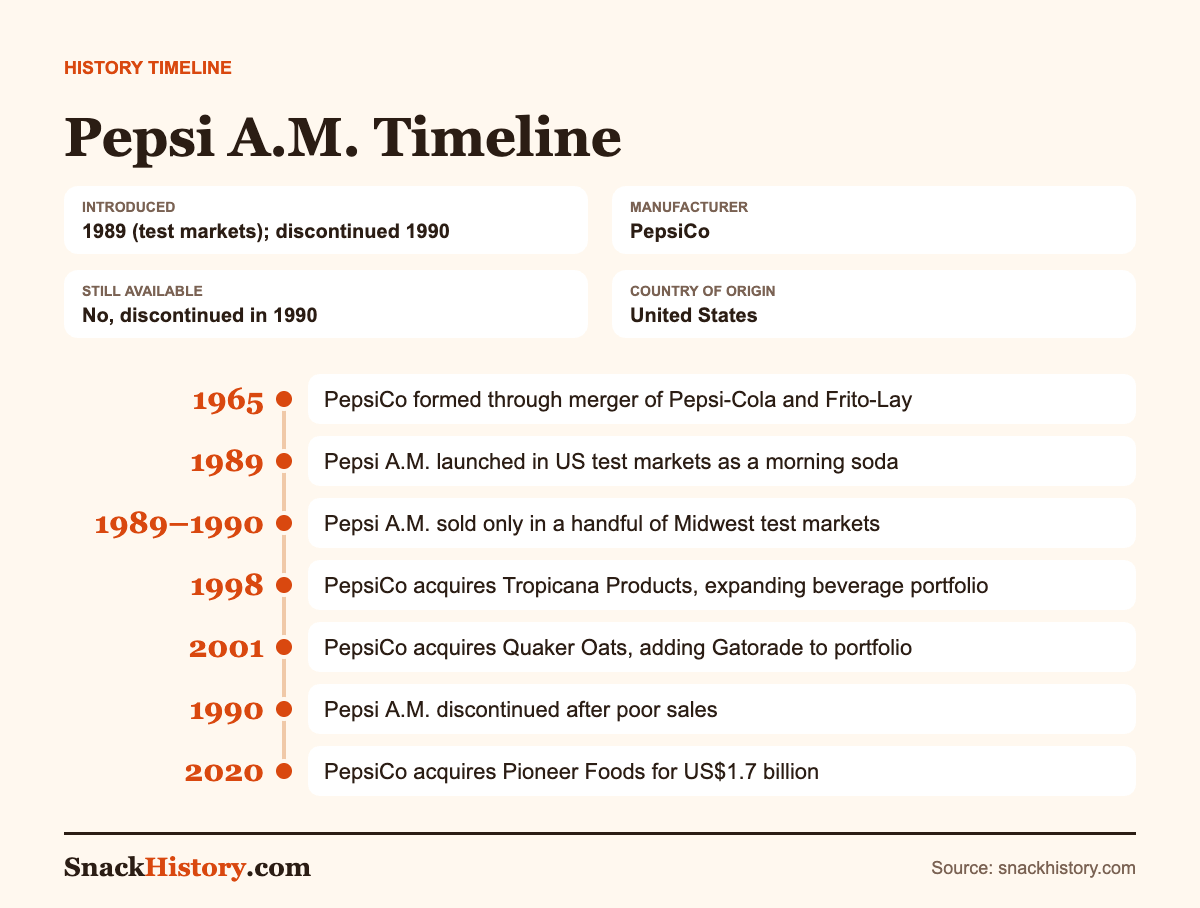
Pepsi A.M. Timeline
- 1965 — PepsiCo formed through merger of Pepsi-Cola and Frito-Lay
- 1989 — Pepsi A.M. launched in US test markets as a morning soda
- 1989–1990 — Pepsi A.M. sold only in a handful of Midwest test markets
- 1998 — PepsiCo acquires Tropicana Products, expanding beverage portfolio
- 2001 — PepsiCo acquires Quaker Oats, adding Gatorade to portfolio
- 1990 — Pepsi A.M. discontinued after poor sales
- 2020 — PepsiCo acquires Pioneer Foods for US$1.7 billion
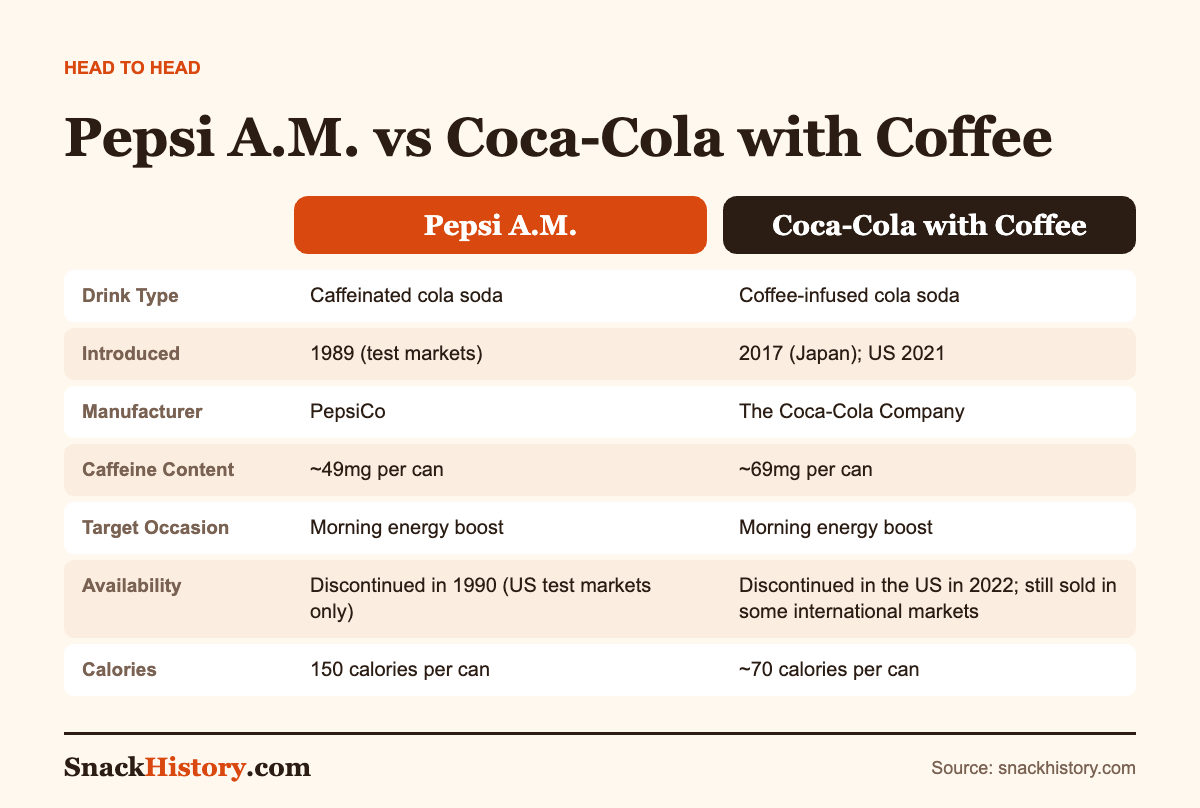
Pepsi A.M. vs Coca-Cola with Coffee
| Feature | Pepsi A.M. | Coca-Cola with Coffee |
|---|---|---|
| Drink Type | Caffeinated cola soda | Coffee-infused cola soda |
| Introduced | 1989 (test markets) | 2017 (Japan); US 2021 |
| Manufacturer | PepsiCo | The Coca-Cola Company |
| Caffeine Content | ~49mg per can | ~69mg per can |
| Target Occasion | Morning energy boost | Morning energy boost |
| Availability | Discontinued in 1990 (US test markets only) | Discontinued in the US in 2022; still sold in some international markets |
| Calories | 150 calories per can | ~70 calories per can |
Overview
Pepsi A.M. was first introduced in 1989 as a test-market soda. It was specifically marketed toward early-morning soda drinkers who wanted a little extra boost to get their day started. The drink contained more caffeine than regular Pepsi, as well as a blend of other ingredients that were meant to give consumers a sense of wakefulness and alertness.
The drink was only available for a short period before it was discontinued. However, it gained a cult following among early-morning soda drinkers who loved the taste and the extra caffeine kick. Even so, Pepsi has never brought it back.
Pepsi A.M. is manufactured by PepsiCo, one of the largest food and beverage companies in the world. It was sold only in a few US test markets, such as Waterloo and Cedar Falls, Iowa, and Fort Wayne, Indiana, and is no longer available.
So what is it about Pepsi A.M. that makes it so popular among soda drinkers? For starters, the drink has a unique and refreshing taste that sets it apart from other sodas. The addition of extra caffeine also makes it a great option. But beyond the taste and the caffeine content, Pepsi A.M. has also managed to gain popularity due to its clever marketing.
The drink is marketed as a morning pick-me-up, making it a great alternative to coffee for those who prefer the taste of soda. Additionally, the drink’s short test-market run in 1989–90 gave it an air of exclusivity and made it a must-try for soda enthusiasts.
Ingredients & Nutritional Value
Pepsi A.M. is a unique morning beverage that’s packed with energy-boosting ingredients. It’s made with the same great taste as regular Pepsi but contains extra caffeine designed to help you stay energized and focused throughout your morning routine.
The main ingredients are carbonated water, high fructose corn syrup, caramel color, natural and artificial flavors, phosphoric acid, caffeine, citric acid, and potassium benzoate.
Like most soda beverages, it contains high fructose corn syrup, which is a type of sugar that’s been linked to various health issues when consumed in excess. However, as a morning beverage, Pepsi A.M. is best enjoyed in moderation as part of a balanced breakfast.
One important thing to note is that Pepsi A.M. contains caffeine, which is a natural stimulant that can increase alertness and improve mental focus. Each 12-ounce can of Pepsi A.M. contained around 49 milligrams of caffeine, about a quarter more than regular Pepsi but still less than a cup of coffee. While caffeine can be beneficial in moderation, it’s important to be mindful of your overall caffeine intake throughout the day.
In terms of nutritional value, Pepsi A.M contains 150 calories per can, which is a relatively moderate amount for a soda beverage. It also has no fat or protein and is relatively low in sodium, with only 30 milligrams per can.
What Does Pepsi A.M. Taste Like?
Pepsi A.M. has a unique and refreshing taste that sets it apart from other soft drinks. It tasted much like regular Pepsi but with less carbonation, which Pepsi said made it smoother.
Unlike citrus sodas such as Mountain Dew or Sprite, it was a straightforward cola. It’s also a great alternative to traditional morning beverages like coffee or tea, as it provides a refreshing burst of energy without the jitters.
One of the great things about the taste of Pepsi A.M. is that it’s versatile and can be enjoyed in a variety of settings.
Packaging Design of Pepsi A.M.
The packaging design of Pepsi A.M is eye-catching and vibrant, just like the drink itself. The logo features the iconic Pepsi globe, with the word “A.M” written in bold, capital letters underneath. The font used for the “A.M.” is slightly different from the classic Pepsi font, which adds a touch of uniqueness to the design.
The colors used on the packaging are primarily blue and white, which gives the can a clean and refreshing look. The blue color is a nod to the classic Pepsi color scheme, while the white provides a crisp contrast that helps the logo and other design elements stand out.
Logo

Marketing Campaigns & Promotional Activities
Pepsi A.M. has certainly had its fair share of clever marketing campaigns and promotional efforts over the years, as already mentioned above. Let’s take a look at some of the most memorable marketing campaigns and promotions that have helped make Pepsi A.M. a household name.
Limited-Edition Pepsi A.M.
The original release of Pepsi A.M. in 1989 was a test-market run that was specifically marketed toward early-morning soda drinkers. The drink’s packaging featured a bright and colorful design that was eye-catching and memorable.
Pepsi also ran television commercials that featured people waking up in the morning and reaching for a can of Pepsi A.M. instead of coffee. The limited edition status of the drink gave it an air of exclusivity and made it a must-try for soda enthusiasts.
“The Taste That Beats Coffee Cold”
Pepsi A.M. was never brought back, so there was no 2014 relaunch campaign. Its original 1989 pitch positioned it as a morning alternative to coffee under the slogan “The taste that beats coffee cold.”
Collaborations with Celebrities and Influencers
Because Pepsi A.M. was discontinued in 1990, it was never part of any social media or influencer campaign.
Special Promotions and Giveaways
Since the drink was gone by 1990, it was never part of later promotions such as ride-sharing giveaways.
Pictures


Interesting Facts About Pepsi A.M.
- Pepsi A.M contained about 49 milligrams of caffeine per 12-ounce can, compared to regular Pepsi’s 38 milligrams per can.
- The drink was pitched as a morning alternative to coffee with the slogan “The taste that beats coffee cold.”
- Pepsi A.M. was one of the first sodas marketed specifically towards morning drinkers. Today, there are a variety of other “breakfast” sodas on the market.
- Pepsi A.M. is not the only soda to contain extra caffeine. Other popular brands such as Mountain Dew and Dr. Pepper also have caffeine levels higher than that of regular Pepsi.
Bottom Line
From its short 1989–90 test-market run to its status as a cult discontinued soda, Pepsi A.M. has come a long way. It’s amazing how a simple twist on a classic drink can make mornings so much more bearable for caffeine lovers everywhere. Whether you’re a die-hard Pepsi fan or just looking for a new way to get your morning fix, Pepsi A.M. is definitely worth a try. Who knows, it might just become your new go-to drink for a refreshing and energizing start to your day!
Frequently Asked Questions about Pepsi A.M.
What is Pepsi A.M. and how is it different from regular Pepsi?
Pepsi A.M. is a morning-focused cola beverage made by PepsiCo that contains more caffeine than regular Pepsi. It was specifically designed for early-morning soda drinkers who want an extra boost to start their day. Its flavor was close to standard Pepsi, but with less carbonation.
How much caffeine does Pepsi A.M. contain?
Each 12-ounce can of Pepsi A.M. contained approximately 49 milligrams of caffeine, about a quarter more than regular Pepsi but less than a standard cup of coffee. This higher caffeine content compared to regular Pepsi is one of the drink's defining features and central to its marketing as a morning beverage. As with any caffeinated product, consumers are advised to be mindful of their total daily caffeine intake.
When was Pepsi A.M. first introduced and is it still available?
Pepsi A.M. was first introduced in 1989 in a few US test markets, targeting morning soda drinkers. It was discontinued in 1990 after poor sales but later developed a cult following. PepsiCo has never brought it back, so it is no longer available.
What does Pepsi A.M. taste like?
Pepsi A.M. tasted much like regular Pepsi but with less carbonation, which Pepsi said made it smoother; some critics found it flat. The drink is designed to be a refreshing morning alternative to coffee or tea without causing the jitters.
What are the main ingredients in Pepsi A.M.?
The main ingredients in Pepsi A.M. include carbonated water, high fructose corn syrup, caramel color, natural and artificial flavors, phosphoric acid, caffeine, citric acid, and potassium benzoate. Each can contains 150 calories, 30 milligrams of sodium, and no fat or protein.
Who made Pepsi A.M.?
PepsiCo made Pepsi A.M. in the United States, pitching it as a breakfast-time cola. It had about 49 mg of caffeine per 12-ounce can, roughly 25 to 28 percent more than regular Pepsi.
Can you still buy Pepsi A.M.?
No. Pepsi A.M. only reached test markets in 1989 and was discontinued in 1990, so it is no longer sold.


Related Posts
Trident Gum: History, Ingredients & Facts
Snack History Nostalgia RatingBig on nostalgia ★★★★★4/5 Quick answer: Trident gum was introduced in 1960 and commercially marketed from 1964 as a sugar-free chewing…
Read more
Lucky Charms Cereal: History, Varieties & Facts
Snack History Nostalgia RatingBig on nostalgia ★★★★★4/5 Quick answer: Lucky Charms were introduced by General Mills in 1964 as toasted oats with marshmallow bits…
Read more
Kaboom Cereal: History, Trivia & Nutrition
Snack History Nostalgia RatingBig on nostalgia ★★★★★4/5 Quick answer: Kaboom cereal was launched by General Mills in 1969 as a circus clown-themed cereal of…
Read more