

Candy Corn: History, Trivia & Facts
Please leave a review or any memories of this snack in the comments at the end of this post.
Snack History Nostalgia Rating: ⭐⭐⭐⭐⭐
There are few candies that are as contentious among candy lovers as candy corn. Some people adore these little corn-shaped treats, and others despise them and state that they taste like colored wax. This remains one of the most popular candies on the market during the Halloween season, but candy corn is sold off-season as well.
It is unlikely that you have never tried candy corn if you live in the US, but if you live in other countries, you might have missed out on this divisive candy. Thankfully, you can order these little candy snacks online if you want to give them a try. Just be prepared to have a strong reaction to this candy and to be able to divide your friends and family into lovers and haters of candy corn!
| Candy Corn | Facts |
|---|---|
| Introduced | 1880s |
| Manufacturer | Wunderle Candy Company (original); later widely produced by other confectioners |
| Candy Type | Penny candy / bulk candy / seasonal confection |
| Original Name | Chicken Feed |
| Original Flavors | Butter sweet (sugar, corn syrup, carnauba wax, and water based) |
| Still Available | Yes, sold seasonally and year-round in bulk |
| Country of Origin | United States |
| Inventor | George Renninger, employee of Wunderle Candy Company |
History
The original candy that would become candy corn was called “chicken feed”. While most people don’t have their own chickens these days, at one time, this would have been a very familiar reference to make with regard to the shape and the styling of this candy. The original product was offered for sale in the 1880s, and advertisements leaned into the chicken feed association as the sole means of marketing the product.
Wunderle Candy Company was the inventor of the product after one of their employees came up with the idea. As with so many candy creation histories, George Renninger appears never to have made any money off his creation that is still popular to this day.’Wunderle Candy Company was the inventor of the product after one of their employees came up with the idea. As with so many candy creation histories, George Renninger appears never to have made any money off his creation that is still popular to this day.
The original candy ads showed a rooster crowing and then stated that the candy was, “something worth crowing for”. There were also claims that the candy was “butter sweet” which might not mean much today, but candy was still not a common part of the eating experiences that most people had enjoyed. Candies were linked mostly with the delivery of medicine during this time, and most candy products that are this old began their lives strictly for this need.
As candies began to be marketed for enjoyment, it was necessary to try and explain what these candies even were since many people would not have known what the experience of eating them would be like. This is hard to imagine today, but once upon a time, there were so few sweet things in people’s diets that explaining that Candy Corn was sweet would not have meant much.
Butter, however, was sweet in nature compared to other parts of people’s diets, so this was a reasonable parallel to draw to try and explain what eating these candies would be like. Since butter was likely a luxury for most families during the late 1800s, it would have been very exciting to eat anything that was as good as butter and for less money and less effort. Since most butter was handmade during this period and most sweets were meant to mask the vile taste of medications, it is no wonder that Wunderle was reaching for ways to explain what their product was and what it could be like to consume.
The reason for the provincial, farm-based nature of the original candies had a lot to do with the way that most people were living their lives at the time that candy corn was first sold. Most people lived in rural areas in the late 1800s, particularly in America, and many people were farmers. There were various other sweets on the market that were catered toward familiar shapes as well, such as turnips, chestnuts, and even clover leaves. The candy corn product was unique for its bright coloring, but the rest of its design was completely in keeping with an affordable candy that could be sold in bulk to people all across the US.
Candy Corn continued to have an association with chickens into the 1920s, and marketing even during this period indicated that this product was the, “king of the Candy Corn Fields”. Post-depression era eating was still very limited, and people still did not have very much money. The roaring twenties were mostly all about enjoying gin and being allowed to dance and cut your hair short as a woman. There were few changes in people’s subsistence diets, and food stores were limited at this time for all but the very wealthy.
The original Candy Corn product was not associated with Halloween or with the fall season. It was sold year-round and was one of the many penny candies that were common in general stores during this period. If you had a penny, you could buy a set amount of candy corn and then take it with you to be eaten at home or to be saved for a special occasion. This is a candy that is still sold in small bulk quantities, and you will always end up with a bag of candy corn, or else you will need to buy it by the pound.
The first version of this candy was actually made by hand by combining sugar, corn syrup, carnauba wax, and water. This was cooked to form a slurry that was then poured into molds. There were three layers poured into the molds to create the striped appearance of the candy corn that is so familiar today. The modern version of this snack is made through corn starch modeling, but otherwise, most of the process has not changed much. A machine does the three unique striping pours, and then the candy is allowed to harden before it is popped out of its molds.
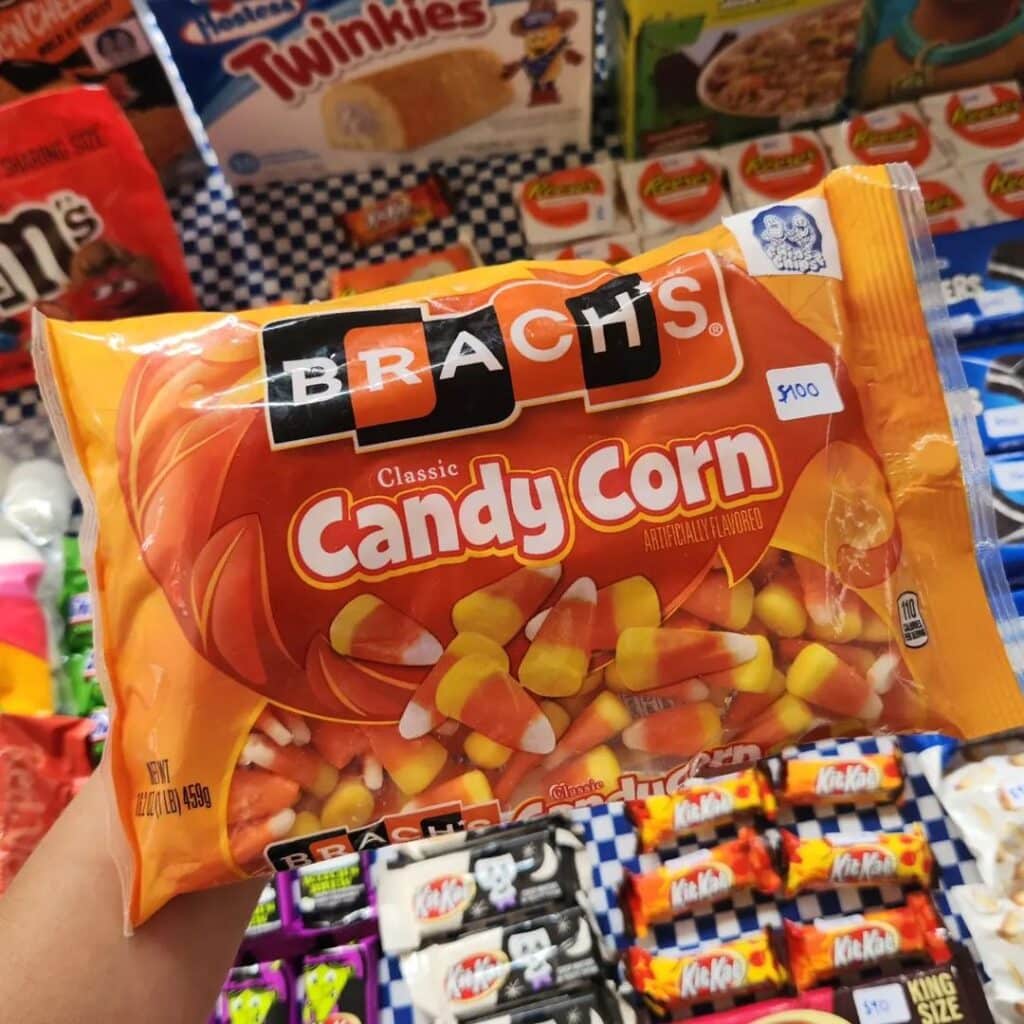
The Goelitz Confectionery Company (now Jelly Belly) bought the candy in 1898. Jelly Belly still makes the product, but the manufacturer is Brach’s Confections which is actually owned by the Ferrara Candy Company. Brach’s makes about 7 billion of these little treats each year during the Halloween season alone.
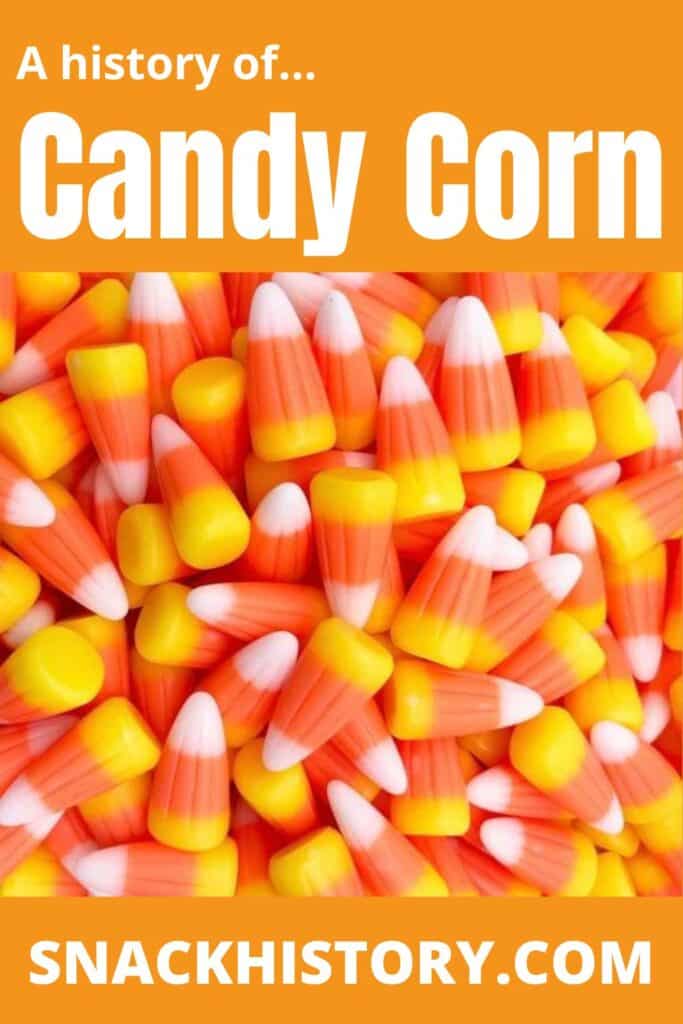
The candies have pretty much always looked the same, and the candy corn that you buy today will be much like Chicken Feed was when it was first sold. Candy corn is a small, triangular-shaped confectionery that is white at the tip, orange in the middle, and yellow at the ends. Meant to look like a variety of corn, it is also known in some areas by the names such as cupid corn, bunny corn, harvest corn, and reindeer corn.
Quick Quiz
Which Of These Is The Oldest Candy?
The texture of this little candy is waxy, which is a big part of what many people do not like about it, but if you like chewy candy, you will probably enjoy the texture. There is nothing specific in the taste profile that is reminiscent of anything other than sugary sweetness. This is nothing like the complex treats that are made today, even in the fruity or chewy candy category, but there is something to be said for simple sweets that aren’t overly challenging to enjoy.
Candy Corn Timeline
- 1880s — Wunderle Candy Company introduces candy corn as 'Chicken Feed'
- 1880s — George Renninger credited as the candy's original inventor
- 1880s–1900s — Sold year-round as a penny candy in general stores
- 1900s–1910s — Candy corn marketed alongside other farm-shaped penny candies
- 1920s — Marketing refers to candy corn as 'king of the Candy Corn Fields'
- 1920s — Candy corn still associated with chickens and rural farm imagery
- Late 20th century — Candy corn becomes strongly associated with Halloween season
- Present — Remains one of the most popular and divisive Halloween candies
Candy Corn vs Mellowcreme Pumpkins
| Feature | Candy Corn | Mellowcreme Pumpkins |
|---|---|---|
| Texture | Waxy, dense, slightly chewy tri-layered candy | Waxy, dense, similar mellow cream texture |
| Introduced | 1880s | Early 20th century |
| Manufacturer | Originally Wunderle Candy Company; now many producers | Most notably Brach's Candy |
| Flavors | Honey, sugar, vanilla, butter sweet base | Honey, sugar, vanilla — nearly identical base |
| Price Range | Budget-friendly; sold in bulk or bags | Budget-friendly; sold in bulk or seasonal bags |
| Availability | Year-round with heavy seasonal Halloween presence | Primarily a Halloween and fall seasonal item |
| Cultural Association | Halloween, fall harvest, highly divisive candy | Halloween, fall season, less culturally divisive |
Variants of Candy Corn
As the popularity of this candy treat grew, so did the need to make spin-off products and other versions of the original candy corn snack. The traditional candy is offered for sale year-round, but sales are stepped up at the start of the fall season and during Halloween. There is also a blackberry cobbler version of the candy that is sold all year in Eastern Canada. This candy looks like the original, but the stripes are different colors.
Harvest Corn is also a popular variation that is offered in the fall by Brach’s, and this version is brown, orange, and white instead of the traditional colors. The flavor is the same, and this product is only ever sold for a limited period of time each season.
In the US, there is also a Christmas version that is called Reindeer Corn, which is Christmas colored. The Valentine’s Day version of the candy is pink, white, and red and is sold during the month of February as Cupid Corn. During the US Independence Day holiday, Freedom corn is on shelves. This version of the candy is red, white, and blue. There is also an Easter version called Bunny Corn which is two pastel colors.
Along the way, there have been years that caramel apple, pumpkin spice, and s’mores candies were sold. Fruit punch, vanilla ice cream, popcorn, hotdog, and hamburger flavors have also existed for brief periods. Brach’s has also partnered with Oreo, M7Ms, and Marshmallows to make Candy Corn flavored versions of these other kinds of snack foods.
Logo
Ingredients
From the Brach’s Site:
- Sugar
- Corn Syrup
- Confectioner’s Glaze (Shellac)
- Salt
- Cocoa Powder
- Hydrogenated Palm Kernel Oil
- Gelatin
- Dextrose
- Honey
- Artificial Flavor
- Sesame Oil
- Yellow 6
- Yellow 5
- Red 3
- Soy Lecithin
- Blue 1
- Red 40
The company states that these products are made in a factory that uses milk, eggs, almonds, coconut, and peanuts to make other products. You will need to be on alert for these potential allergen exposures even though the candies themselves do not contain these ingredients.
Nutrition
| Serving Size: | 0.5 cup (100g) | % Daily Value* |
| Amount Per Serving | ||
| Calories | 373 | |
| Calories from Fat | 0.2 | |
| Total Fat | 0g | 0% |
| Saturated Fat | 0g | 0% |
| Polyunsaturated Fat | 0g | |
| Monounsaturated Fat | 0g | |
| Cholesterol | 0mg | 0% |
| Sodium | 11mg | 0% |
| Potassium | 4mg | 0% |
| Total Carbohydrates | 93g | 31% |
| Dietary Fiber | 0g | 0% |
| Sugars | 89g | |
| Protein | 0g | |
| Vitamin A | 0% | |
| Vitamin C | 0% | |
| Calcium | 0.2% | |
| Iron | 0.1% |
- Percent Daily Values are based on a 2000-calorie diet.
Pictures
Ads:
A fairly recent ad for Candy corn:
An ad for “tailgate” flavored Brach’s on the news:
A how it’s made video:
FAQ
What is Candy Corn made of?
Candy corn starts as a mixture of u003cstrongu003esugar, fondant, corn syrup, vanilla flavor, and marshmallow cremeu003c/strongu003e. The candy corn ingredients are melted into a liquid candy—called slurry—colored, and run through a cornstarch molding process to create each kernel.
The Halloween treat u0022Candy Cornu0022 was originally sold under what name?
Candy Corn was originally named u003cstrongu003eChicken Feedu003c/strongu003e.
What flavor is Candy Corn?
Brach’s candy corn is America’s number one tri-colored treat that has a u003cstrongu003esweet, real honeyu003c/strongu003e flavor.
When was Candy Corn invented?
Candy corn has existed for more than 100 years. According to legend, a Wunderlee Candy Company employee named George Renninger invented the confection in u003cstrongu003ethe 1880su003c/strongu003e.
Why is Candy Corn called Candy Corn?
Candy Corn used to be made by hand in large kettlesu003cbru003eIn the early days of the 20th century, workers cooked sugar, corn syrup, marshmallow, and other ingredients into a slurry in large kettles and then poured the warm mixture by hand into cornstarch trays imprinted with the kernel shape.
Who Invented Candy Corn?
According to legend, a Wunderlee Candy Company employee named George Renninger invented the confection in u003cstrongu003ethe 1880su003c/strongu003e.
What does Candy Corn taste like?
The actual flavor of most candy corn is u003cstrongu003ea mix of vanilla and marshmallow with notes of honeyu003c/strongu003e.
What does Candy Corn look like?
In its traditional form, candy corn is u003cstrongu003ea small, triangular candy consisting of three colored sections (white, orange, and yellowu003c/strongu003e)
What color is Candy Corn?
Candy Corn is u003cstrongu003ewhite, orange, and u003ca href=u0022https://www.snackhistory.com/yellow-candy/u0022u003eyellowu003c/au003e.u003c/strongu003e
Why was Candy Corn originally called Chicken Feed?
u003cstrongu003eBecause corn was used to feed chickensu003c/strongu003e, the product was dubbed u0022Chicken Feed,u0022 and the box featured a colourful rooster.
Who invented Candy Corn?
u003cstrongu003eGeorge Renninger invented it in the 1880su003c/strongu003e, and Goelitz Confectionery Company (now Jelly Belly Co.) popularised it around the turn of the century.
How many calories in Candy Corn?
There are u003cstrongu003e373 caloriesu003c/strongu003e in every 100g of Candy Corn.
When is National Candy Corn day?
National Candy Corn Day is on u003cstrongu003e30th Octoberu003c/strongu003e in the United States.
How much Candy Corn is sold each year?
According to the National Confectioners Association, u003cstrongu003emore than 35 million poundsu003c/strongu003e (or 9 billion pieces) of candy corn are produced yearly.
What country did Candy Corn originate?
Candy Corn originated in the United States.
Frequently Asked Questions about Candy Corn
Who invented candy corn?
Candy corn was invented by George Renninger, an employee of the Wunderle Candy Company, which was the first company to produce and sell the candy. The product was introduced in the 1880s under the name 'Chicken Feed.' Unfortunately, as noted in the history of many candy creations, Renninger appears never to have profited financially from his popular invention.
Why was candy corn originally called 'Chicken Feed'?
The candy was originally called 'Chicken Feed' because most people during the late 1800s lived in rural areas and were familiar with farming, making the corn-kernel shape a recognizable and relatable reference. Early advertisements leaned heavily into this association, featuring a rooster and slogans like 'something worth crowing for.' The farm-based theme was consistent with other penny candies of the era that were shaped like turnips, chestnuts, and clover leaves.
Was candy corn always associated with Halloween?
No, candy corn was not originally associated with Halloween or the fall season at all. It was sold year-round as a penny candy available in general stores, where customers could purchase a set amount for a single penny. The Halloween association developed later in the candy's history, though it remains one of the most popular Halloween season candies today.
How was the original candy corn made?
The first version of candy corn was made entirely by hand using a combination of sugar, corn syrup, carnauba wax, and water. These ingredients were cooked together to create a slurry, which was then poured into molds in three separate layers to create the iconic tri-colored look. This labor-intensive hand-production process was the standard method of manufacturing candy corn in its early days.
Why did early candy corn advertisements describe it as 'butter sweet'?
The term 'butter sweet' was used in early candy corn advertising to help consumers understand what eating the candy would feel like at a time when most people had very little experience with sweet foods. Candies during this era were mostly associated with delivering medicine, and sugar-based treats were rare luxuries. Since butter was one of the sweeter elements in most people's limited diets during the late 1800s, comparing candy corn's sweetness to butter was a practical and relatable way to describe the experience to potential buyers.


Related Posts
Goldfish Crackers: History, Flavors & Facts
Please leave a review or any memories of this snack in the comments at the end of this post. Snack History Nostalgia Rating: ⭐⭐⭐⭐☆…
Read more
Cinnamon Toast Crunch: History, Facts & Trivia
Please leave a review or any memories of this snack in the comments at the end of this post. Snack History Nostalgia Rating: ⭐⭐⭐⭐☆…
Read more
Dagoba Chocolate: History, Ingredients & Varieties
Please leave a review or any memories of this snack in the comments at the end of this post. Snack History Nostalgia Rating: ⭐⭐☆☆☆…
Read more