

90s Gum: History, Brands & Packaging
Please leave a review or any memories of this snack in the comments at the end of this post.
Snack History Nostalgia Rating: ⭐⭐⭐⭐☆
In the 1990s, the advent of TV culture and, later, the internet, exposed households to an unprecedented level of fashion, trends, and pop culture. Advertisers had been targeting children and teenagers since the 1960s.
Three decades later, we saw a proliferation of 90s gums and sweets vying for the attention of the nation’s youth. As the market became increasingly saturated, new gum brands and concepts were forced to constantly innovate and differentiate their products to stay relevant.
There’s no doubt that everyone who has a sweet tooth will find it interesting to learn more about 90s gum candies. That is why we explored some of the most popular 90s gum brands in this article.
| 90s Gum | Facts |
|---|---|
| Introduced | 1988 (Bubble Tape); various 90s gum brands peaked in the 1990s |
| Manufacturer | Wm. Wrigley Jr. Company (multiple brands including Hubba Bubba, Big Red) |
| Candy Type | Bubble gum and chewing gum |
| Original Flavors | Strawberry, watermelon, grape, cinnamon, bubblegum, and fruit varieties |
| Still Available | Some brands still available (e.g., Bubble Tape, Big Red, Big League Chew); others discontinued (e.g., Carefree) |
| Country of Origin | United States |
| Parent Company | Wm. Wrigley Jr. Company (primary producer of multiple 90s gum brands) |
| Cultural Impact | Targeted children and teenagers through TV advertising with novelty packaging and branding |
90s Gum Timeline
- 1975 — Big Red cinnamon chewing gum first produced by Wrigley.
- 1980s — Big League Chew initially released; popular in baseball culture.
- 1988 — Bubble Tape first developed by Wm. Wrigley Jr. Company.
- Early 1990s — Bubble Tape peaks; over 1 million containers produced weekly.
- Early 1990s — Bubble Beeper launched, designed to resemble a 90s pager.
- Mid-to-late 1990s — Big Red becomes popular US souvenir in UK and Ireland.
- 2003 — Wrigley replaces some Big Red sugar with aspartame and Ace K.
- 2007 — Big Red re-released in Australia after late-1980s production halt.
- 2009 — Ouch! Gum updated with fresh style, packaging, and new bubblegum flavor.
90s Gum vs Hubba Bubba (standard)
| Feature | 90s Gum | Hubba Bubba (standard) |
|---|---|---|
| Texture | Bubble Tape – soft spiral-wrapped bubblegum strip | Hubba Bubba – soft, chunky bubble gum pieces |
| Introduced | 1988 | 1979 |
| Manufacturer | Wm. Wrigley Jr. Company | Wm. Wrigley Jr. Company |
| Flavors | Original, watermelon, blue raspberry, strawberry, cotton candy, green apple | Original, strawberry, watermelon, grape, tropical |
| Packaging | Hockey-puck circular plastic tape dispenser | Standard rectangular foil-wrapped pieces |
| Availability | Still available today | Still available today |
| Target Audience | Children; marketed with 'for you, not them' slogan | General bubble gum consumers, children and adults |
Names of 90s Gum
- Ouch!
- Bubble Beeper
- Carefree Gum
- Big Red Chewing Gum
- Bubble Tape
- Big League Chew
- Winterfresh
- Fruit Stripe Gum
- Bubble Yum
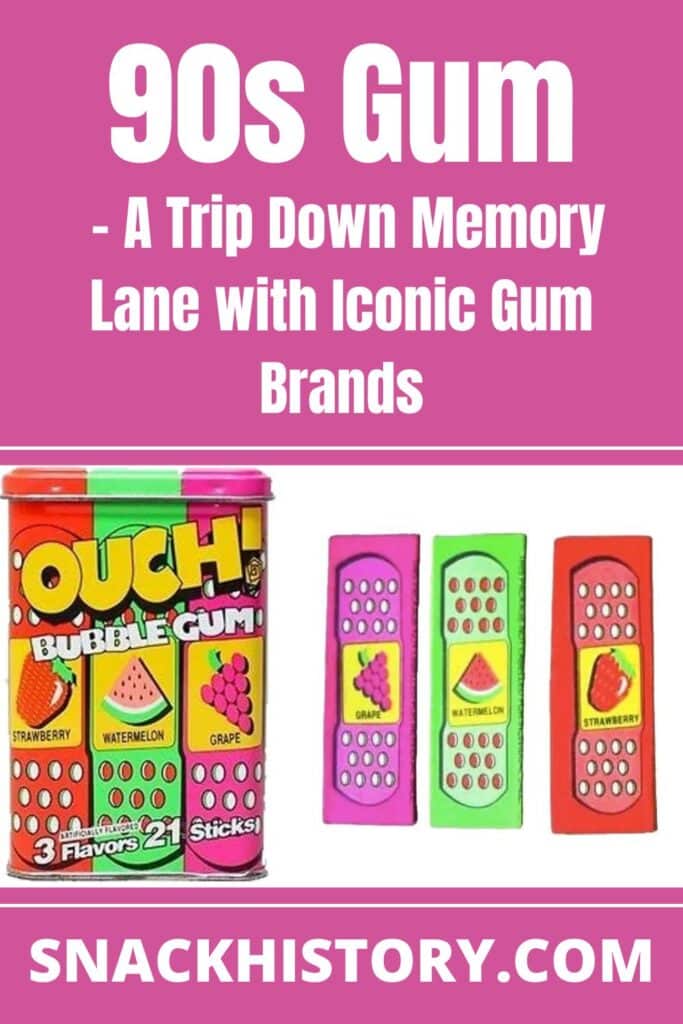
9 Most Popular and Memorable 90s Gum
1. Ouch!
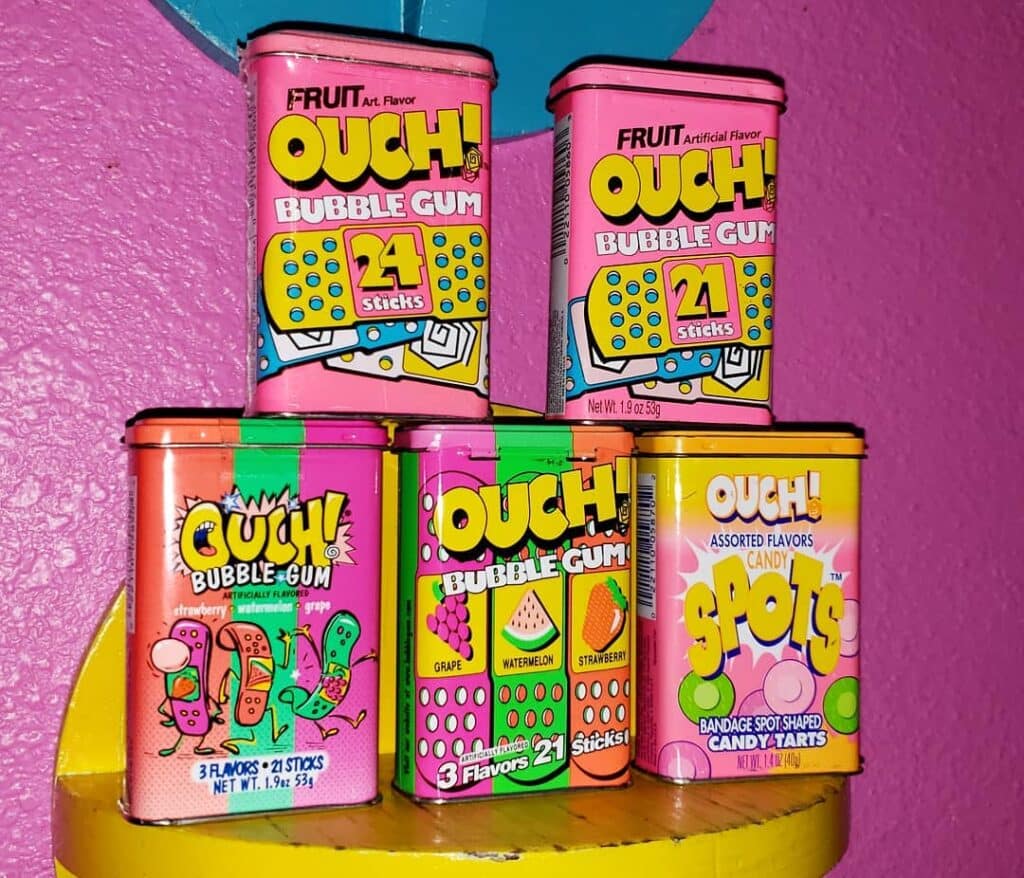
Under the Hubba Bubba brand, the Wm. Wrigley Jr. Company produces sugar-free bubble gum called “Ouch Gum.” It’s a fantastic 90s gum that has survived in our childhood memories. One of the reasons is that the packaging, which was made to resemble an old band-aid tin in technicolor, was extremely appealing to youngsters in the 1990s.
It generally contained a strawberry, watermelon, or grape piece of gum, and each piece had a wrapping that resembled a bright band-aid. The gum was updated in October 2009 with a fresh style and packaging; a bubblegum taste is now also offered. One of a possible twenty collectible games is included in each bundle.
2. Bubble Beeper
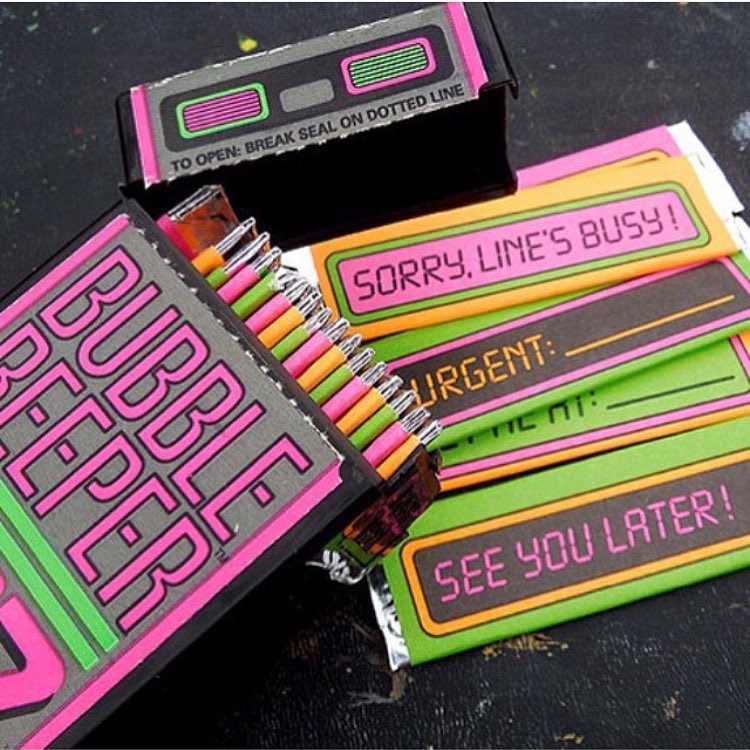
What was it about the 1990s that required gum to be hidden in a container that sort of resembled another object? The Bubble Beeper was designed to look like a typical beeper from the 1990s. Some of the packaging was hard plastic with a hook on the back that could be hooked to your pants and used to carry the gum around like a kid gum vendor. Each piece of gum also came with a wrapper that had a word related to beepers on it. Some of these wrappers even allowed for writing if you wanted to share your gum.
3. Carefree Gum
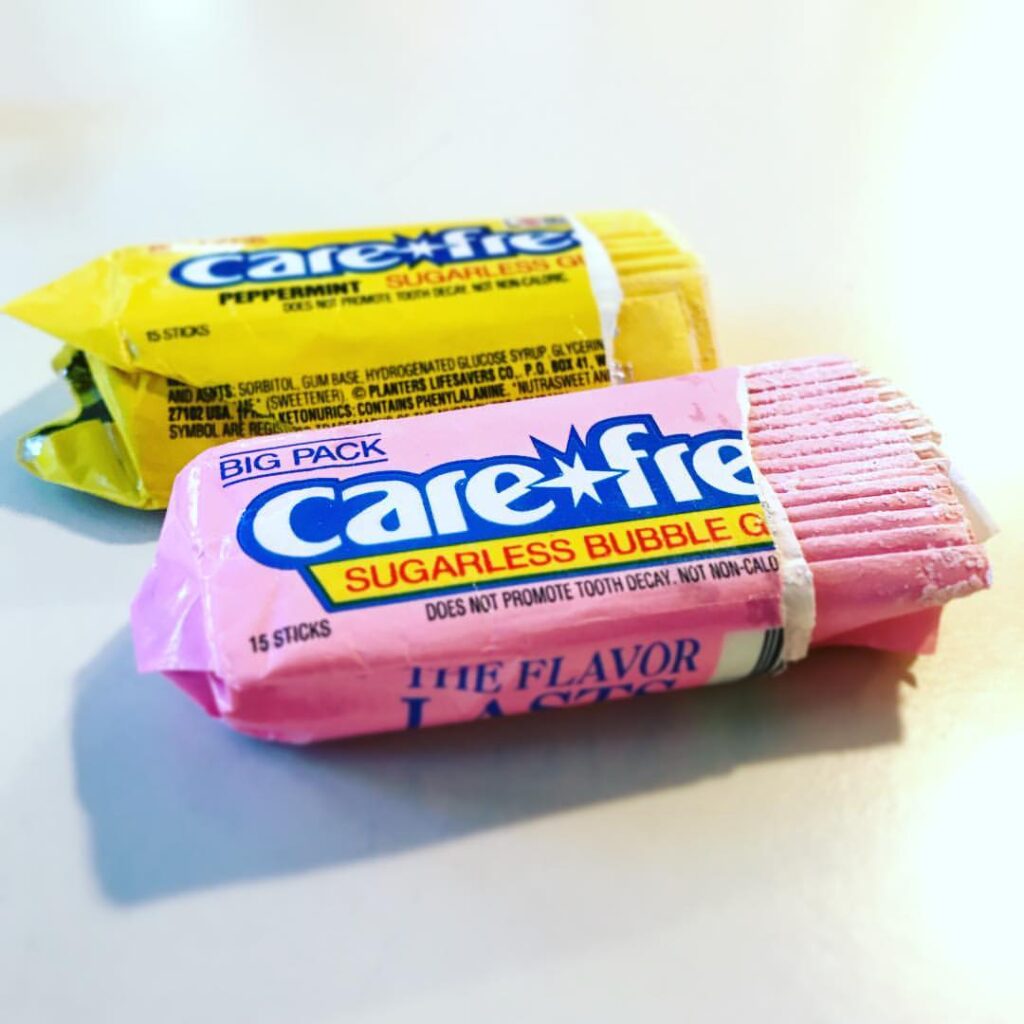
Carefree, sugar-free gum from the 1990s is no longer manufactured. Carefree gum was no stranger to the sugar-free craze that swept the nation in the 1990s. After all, that was its whole selling point. Although they claim in their advertising that “the flavor lasts,” the flavor would fade quite soon.
4. Big Red Chewing Gum
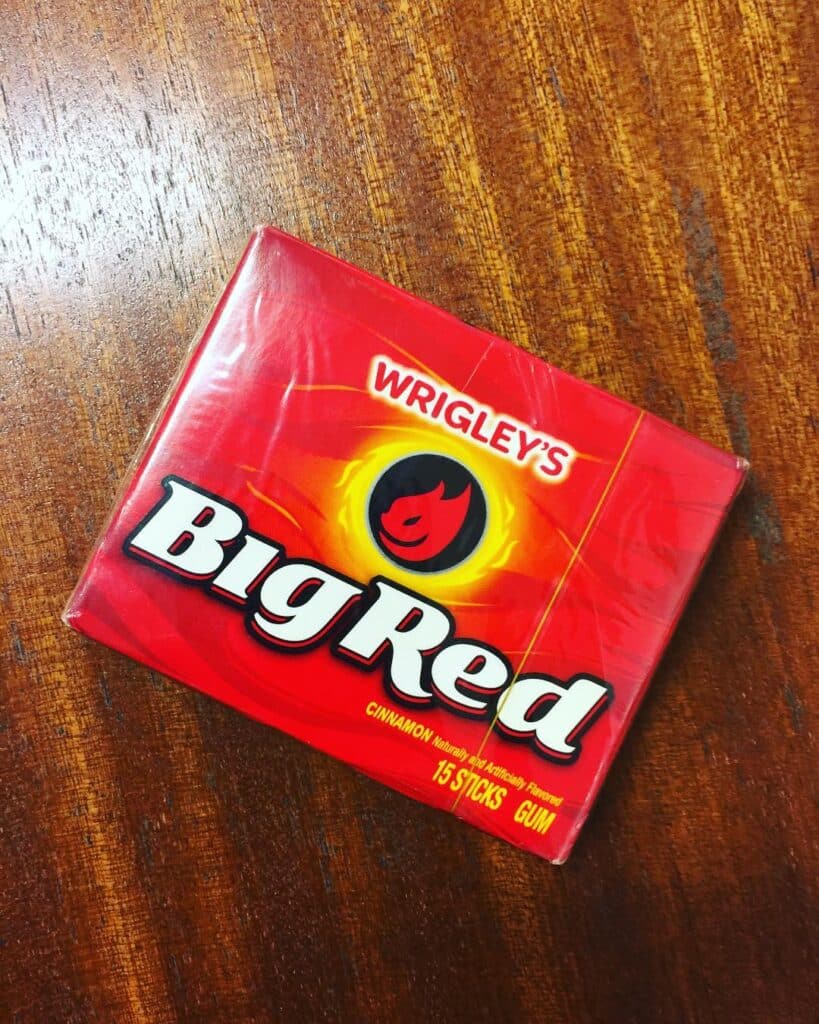
The William Wrigley Jr. Company first produced Big Red, a chewing gum with a cinnamon taste, in 1975. Big Red was a popular candy in the United Kingdom and Ireland as a souvenir for tourists visiting the United States from the mid-to-late 1990s. Australia saw the early to mid-1980s debut of Big Red as well, although production stopped at the end of the decade.
It was re-released at the end of 2007. Mexico, Luxembourg, Belgium, Latvia, Norway, Poland, Slovenia, New Zealand, and portions of Sweden are other countries where it is sold. Its taste is intended to be fiery. Despite not being a sugar-free gum, Wrigley’s switched out some of the sugar in 2003 in the United States with artificial sweeteners such as aspartame and Ace K.
5. Bubble Tape
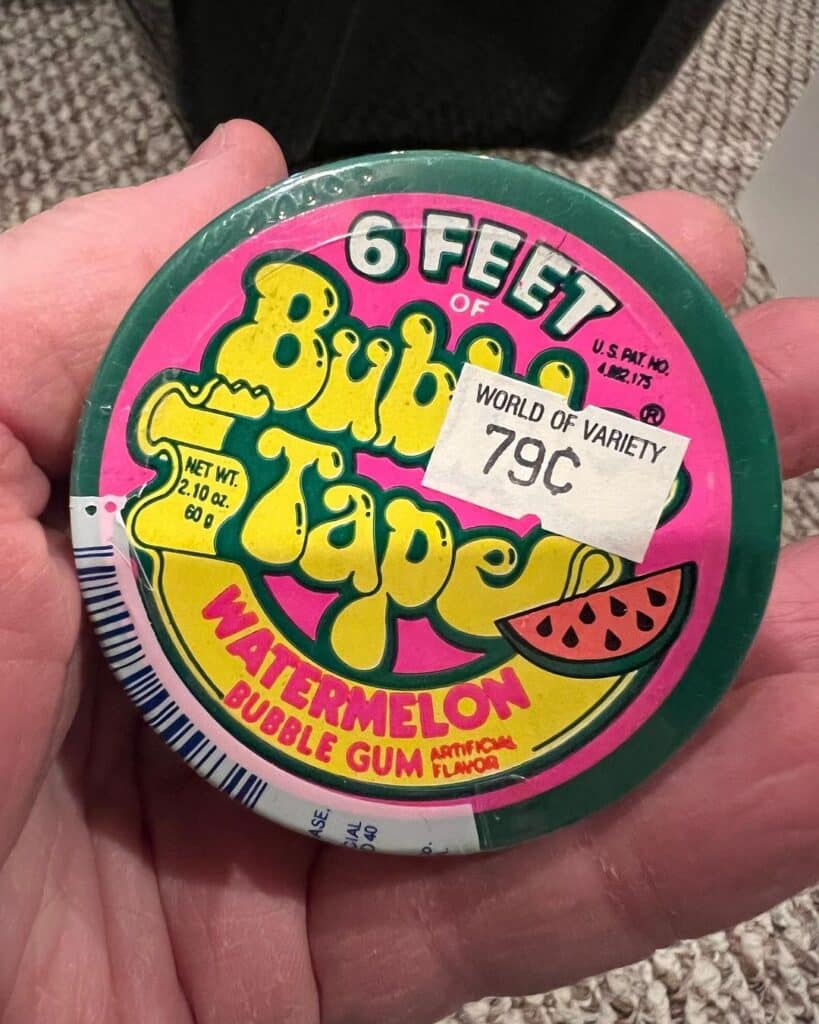
A Hubba Bubba variety called Bubble Tape was first developed in 1988 by the Wm. Wrigley Jr. Company. In all of its remarkable tape-likeness, bubble tape is still in use today. In a hockey-puck-sized circular plastic “tape” dispenser, there were six feet of spiral-wrapped bubblegum.
The early 1990s advertising specifically targeted children who were tired of bothersome adults with the phrase “for you, not them,” which contributed to the popularity of this gum among young people. And it succeeded. Everyone loved the 90s gum, Bubble Tape.
Quick Quiz
Which Of These Is The Oldest Candy?
Due to its distinctive packaging and direct marketing to adolescent children, it reached its peak popularity in the early 1990s. Over 1 million containers of Bubble Tape were produced each week at the height of its production.
The majority of flavors of Bubble Tape are from the Hubba Bubba regular brand of chewing gum. The list includes original green apple, unsweet watermelon, Cotton Candy Strapping in Sour, blue raspberry, strawberry Fruit Gushing, Juicy Triple Mix, and others.
6. Big League Chew
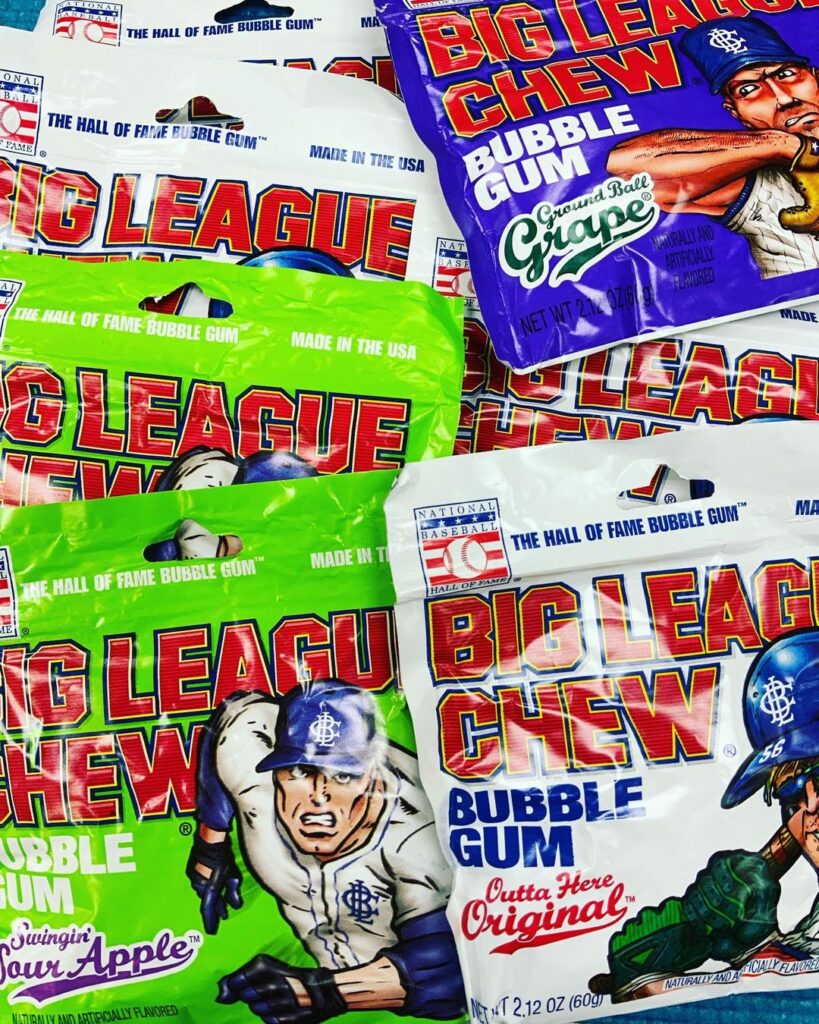
Big League Chew was initially released in the 1980s, but it was still popular in the 1990s, especially among people who either played baseball or had to watch their siblings play the game. Rob Nelson, a left-handed pitcher for the Portland Mavericks, and Todd Field, a bat boy and aspiring director, developed the bubble gum brand known as “Big League Chew” in the United States.
“You’re in the big leagues when you’re into Big League Chew!” was the initial advertising tagline used during the 1980s. The Baseball Hall of Fame has officially endorsed it, and it is being marketed as “Hall of Fame Bubble Gum.”
A fellow Maverick and former All-Star for the New York Yankees, Jim Bouton then proposed it to the Wrigley Company, the longstanding owners of the Chicago Cubs, as a humorous parody of the tobacco-chewing custom that was popular among athletes in the 1970s. Since its introduction in 1980, Big League Chew has sold more than 800 million packets.
Big League Chew was first offered in May 1980, with the same classic pink hue as other well-known brands of bubble gum. It quickly became synonymous with 1990s gum. Actually, regular sheets of bubble gum were used to create the first shredded R&D concept samples of the product using an ordinary office paper shredder.
Ford Gum & Machine Company moved manufacturing from Mexico and now produces it in the US in Akron, New York, after acquiring the distribution rights from Wrigley at the end of 2010.
7. Winterfresh
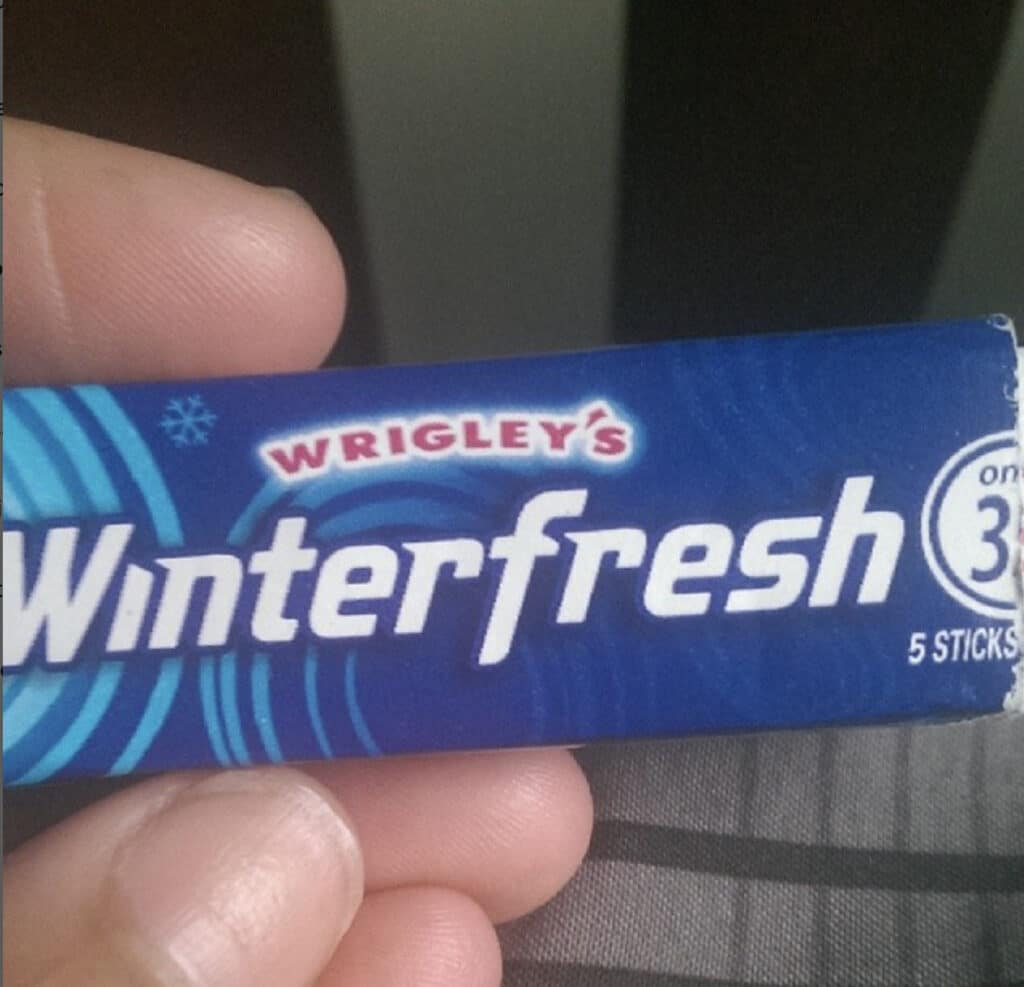
In 1994, Wrigley introduced Winterfresh Gum to the market as an alternative to the Big Red brand. It was all about having ice, and long-lasting breath. You most likely purchased a pack or two of Winterfresh 90s gum candy if you had a date coming up.
As of 2004, this 90s gum featured two different packages for the winter market. Winterfresh ran a series of advertisements from 2006 to 2008, dubbed “Cool Breath Power,” the majority of which were “Attraction Chronicles.” The narrator of these ads, which were aimed at the teen market, would frequently provide odd love advice in an equally unusual setting.
Karl Ackermann served as the film’s director, artist, and animator, while Milky Elephant created the animation in an old-school Macromedia Flash style. Some have compared the animation to the early seasons of South Park.
8. Fruit Stripe Gum
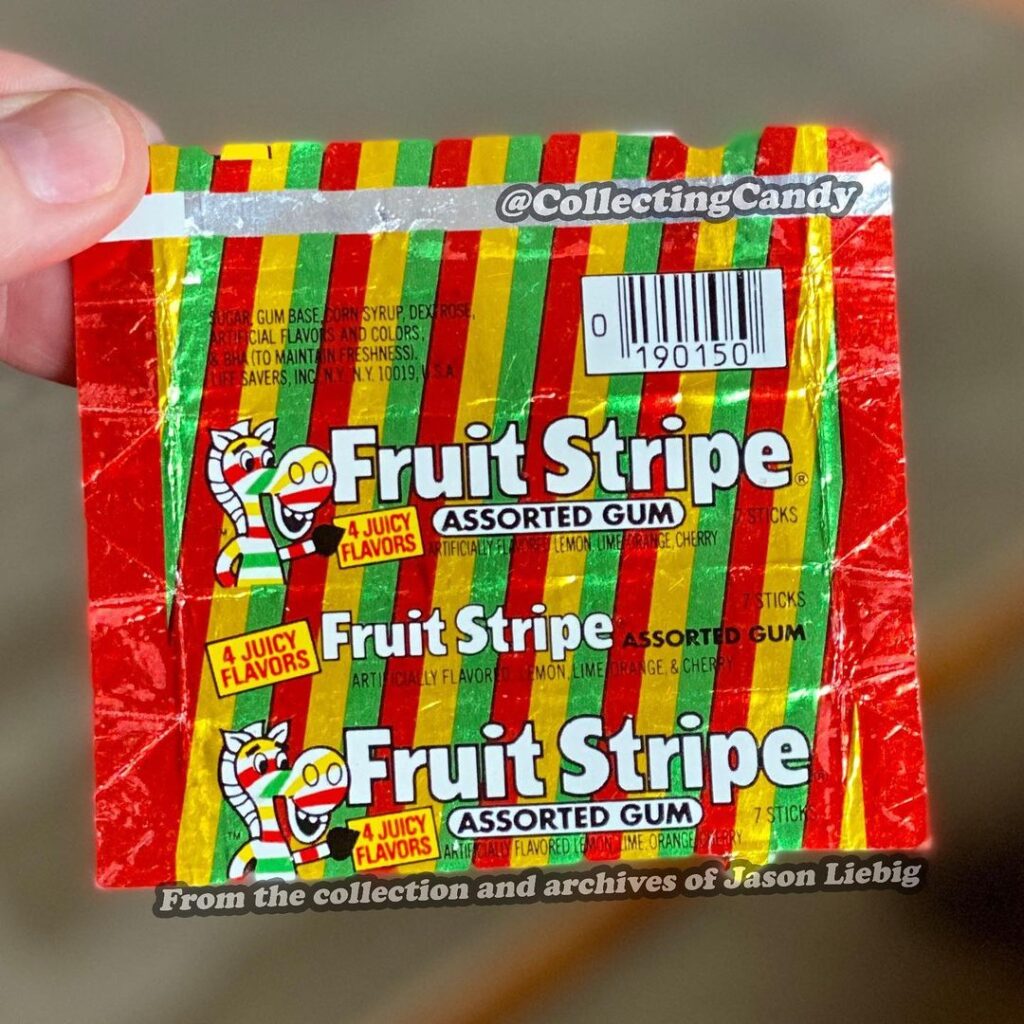
The simple yet catchy Fruit Stripe gum, which also functions as a temporary tattoo, is what made the Fruit Stripe popular 90s gum. Chewing gum was created for the first time in the 1960s, but it truly gained popularity in the 1990s and became iconic 90s gum.
James Parker created “Five Flavor Gum,” which was initially sold by the Beech-Nut Corporation. In 2003, The Hershey Company sold the Fruit Stripe brand to Farley’s & Sathers Candy Company. In 2012, Farley’s & Sathers and Ferrara Pan united to establish the Ferrara Candy Company, which in 2017 became a fully owned subsidiary of Ferrero. Fruit Stripe Gummy Candy, a brand-new kind, was released in 2022.
The Fruit Stripe Gum Man, an anthropomorphic gum pack with limbs and a face, served as the product’s spokesperson. The Stripes Family Animals, which comprised a zebra, tiger, elephant, and mouse, appeared in a coloring book, plush toys, and other forms of advertising.
Fruit Stripe donated $5 from every Jumbo Pack and Variety Multipack sold in 1996 to the World Wildlife Fund for the protection of endangered species and their habitats, amounting to almost $100,000.
9. Bubble Yum
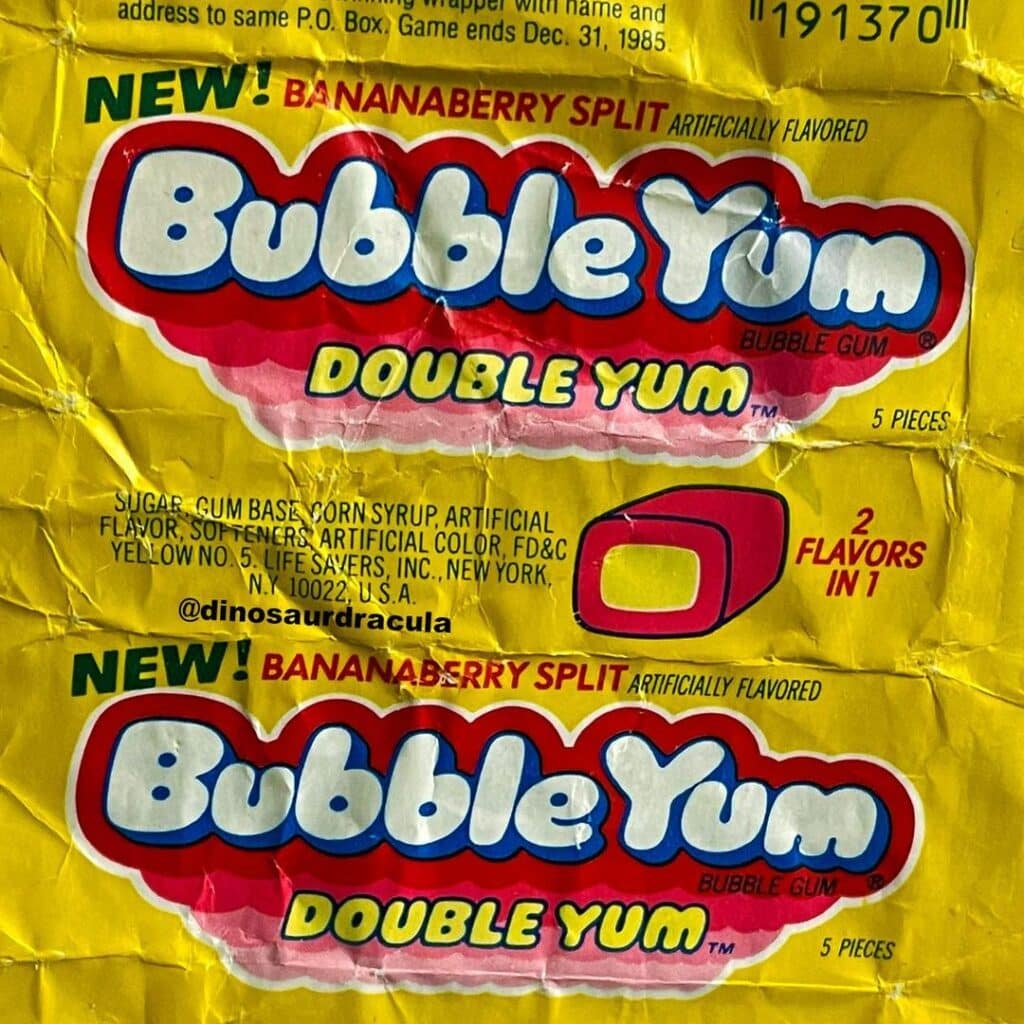
Bubble Yum, the first soft chewing gum ever produced, was originally offered by the Life Savers Company in 1975. In Fisk, Missouri, a housewife invented it and gave it the moniker “rubber bubblegum.” She immediately sold the formula to the St. Louis-based Life Savers confectionery business. Even though it didn’t last very long, it was indeed one of the most beloved 90s gum. Bubble Yum was definitely the gum to buy if you wanted some soft gum and a higher possibility of blowing bubbles.
Currently, the Hershey Company markets bubble gum under the name Bubble Yum. To put an end to the myth (that the spider eggs were in the gum product) and regain the public’s trust, the Life Savers Company responded to the situation with an official full-page denial that was published in eminent American newspapers.
The gum’s sales quickly overtook those of Life Savers candies, making it the most widely used brand of bubble gum. Life Savers were purchased by Nabisco in 1981, while Bubble Yum was purchased by The Hershey Company in 2000.
Bottom Line
We’ve just explored some of the most loved 90s gum. As an eye-catching appearance may go a long way in getting chewing gum or bubble gum pulled from the packed shelves at the candy store or supermarket, novelty packaging became a big part of this “gum and candy race.”
The 90s gum and candy industries primarily imitated the society around them, adopting trends that ranged from the sugar-free lifestyle gums made for adults to the novelties that catered to the more sophisticated adolescent and preteen audience.
Frequently Asked Questions about 90s Gum
What made 90s gum packaging so unique and appealing to kids?
Many 90s gum brands used novelty packaging designed to resemble everyday objects, such as Ouch! Gum styled like a band-aid tin and Bubble Beeper shaped like a pager. This creative approach made the gum feel more like a toy or accessory than just a candy. The packaging played a significant role in attracting children and teenagers during the decade.
Is Bubble Tape still available today?
Yes, Bubble Tape is still available today and remains one of the more enduring 90s gum brands. It was first developed in 1988 and reached peak popularity in the early 1990s, producing over 1 million containers per week. Its distinctive hockey-puck-sized plastic dispenser has helped it remain iconic decades later.
Who invented Big League Chew and what was its connection to baseball?
Big League Chew was created by Rob Nelson, a left-handed pitcher for the Portland Mavericks, and Todd Field, a bat boy and aspiring director. It was designed to appeal to baseball players and fans, and has since been officially endorsed by the Baseball Hall of Fame. It is now marketed as 'Hall of Fame Bubble Gum.'
Was Carefree Gum really sugar-free, and is it still made today?
Yes, Carefree Gum was marketed as a sugar-free chewing gum, which was its primary selling point during the 90s sugar-free craze. Despite advertising claims that 'the flavor lasts,' the flavor was noted to fade quickly. Carefree gum is no longer manufactured today.
In which countries was Big Red chewing gum sold outside the United States?
Big Red was sold in several countries beyond the US, including the United Kingdom, Ireland, Australia, Mexico, Luxembourg, Belgium, Latvia, Norway, Poland, Slovenia, New Zealand, and parts of Sweden. It became particularly popular in the UK and Ireland as a souvenir for tourists visiting America in the mid-to-late 1990s. Australia saw an early release in the 1980s, though production halted before being revived in 2007.


Related Posts
80s Gum: History, Brands & Flavors
Please leave a review or any memories of this snack in the comments at the end of this post. Snack History Nostalgia Rating: ⭐⭐⭐⭐☆…
Read more
Fruit Stripe Gum: History, Flavors & Availability
Please leave a review or any memories of this snack in the comments at the end of this post. Snack History Nostalgia Rating: ⭐⭐⭐⭐⭐…
Read more
Wrigley’s Gum: History, Facts & Trivia
Please leave a review or any memories of this snack in the comments at the end of this post. Snack History Nostalgia Rating: ⭐⭐⭐⭐⭐…
Read more