Coconut Grove Candy Bar: History, Brands & Facts
Please leave a review or any memories of this snack in the comments at the end of this post.
Snack History Nostalgia Rating: ⭐⭐⭐⭐⭐
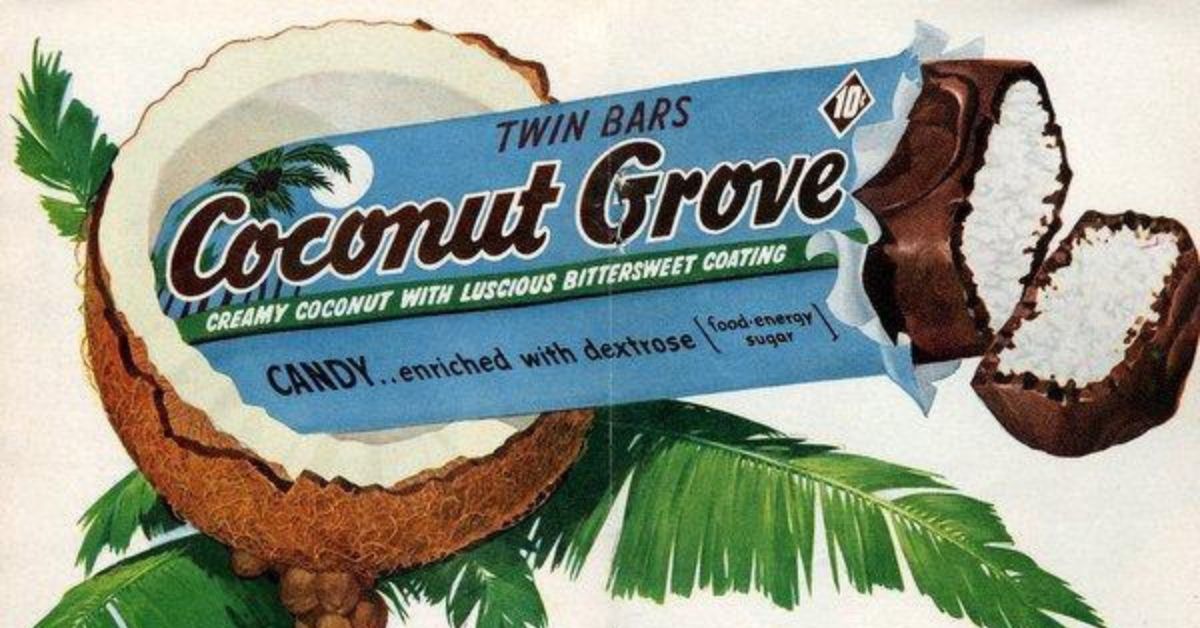
Let’s take a step back in history to a delicious, coconutty candy bar that some of you might well remember. While these tasteful bars are no longer sold, there are some similar reproductions on the market now that you could enjoy.
The Coconut Grove candy bar was a timeless classic, and one well worth remembering. Take a look below to know more!
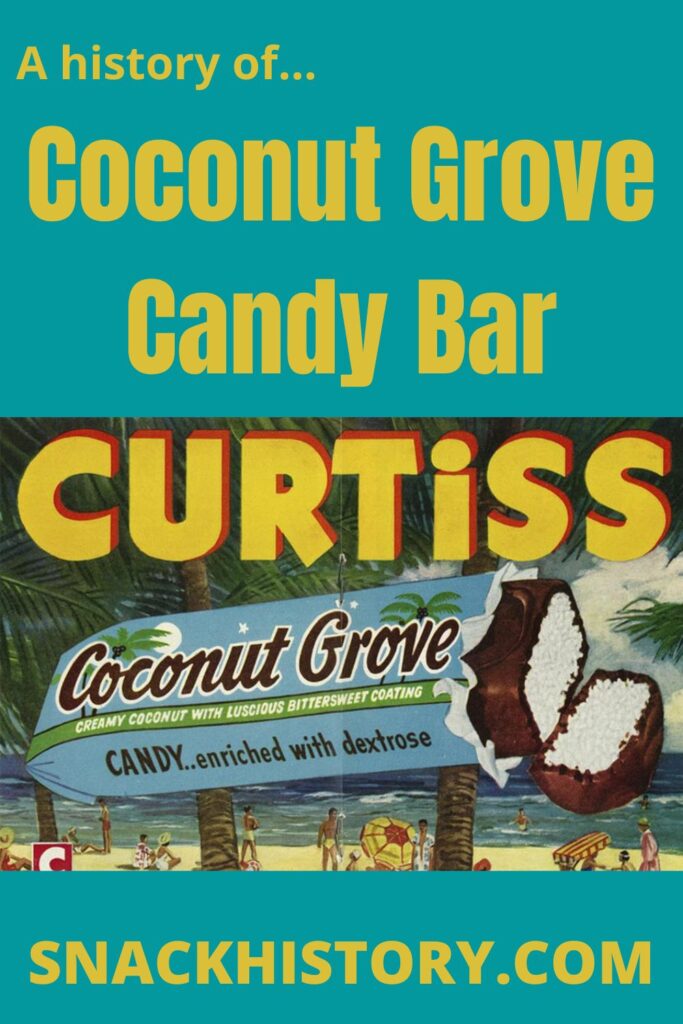
| Coconut Grove Candy Bar | Facts |
|---|---|
| Introduced | c. 1949 (some references suggest as early as c. 1940) |
| Manufacturer | Curtiss Candy Company |
| Candy Type | Coconut and chocolate bar |
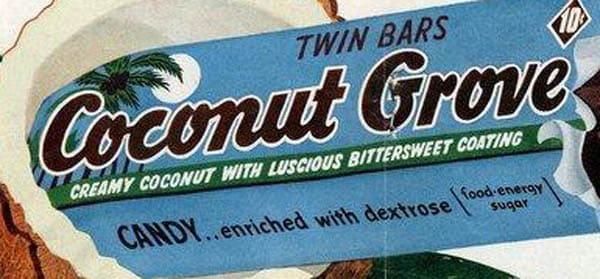
| Original Flavors | Creamy coconut with bittersweet chocolate coating |
| Still Available | No; similar reproduction bars exist |
| Country of Origin | United States |
| Parent Company | Curtiss Candy Company (later sold to Standard Brands in 1964) |
| Original Price | 5 cents |
History
The history of the Coconut Grove candy bar is tied heavily to the Curtiss Candy Company. The Curtiss Candy Company made the first Baby Ruth bars, as well as several other popular candy bars you might recognize. They were known for the Kandy Kake, Butterfinger, and more. That particular candy company was founded in 1916 near Chicago, Illinois.
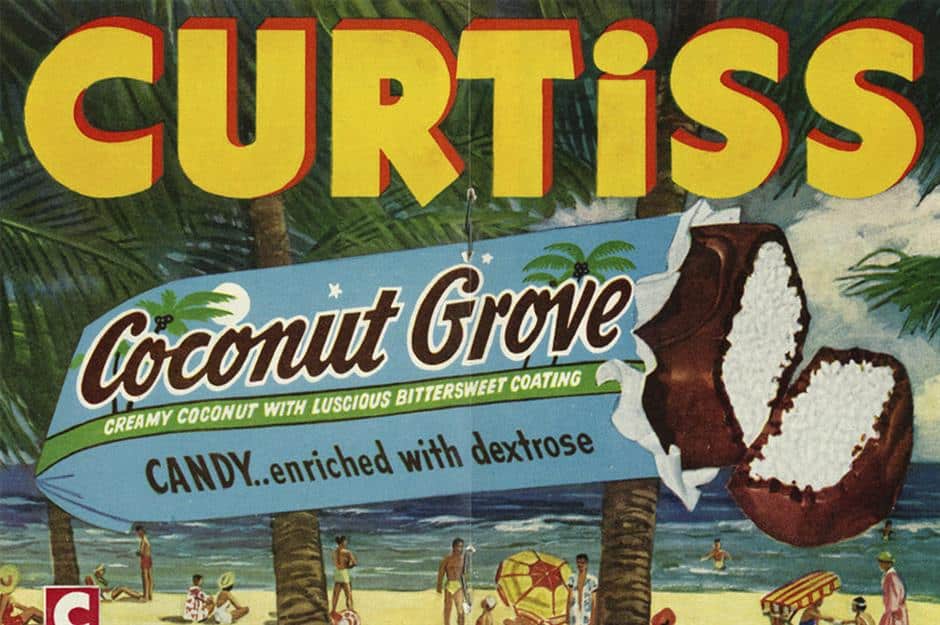
The Coconut Grove bar was labeled as a “tasty TV treat”. We’re not sure exactly when it came out but most historical recalls of the candy bar date it back to sometime near 1940. When they marketed the bar, they marketed as coming from the same company that sold these other popular selections, and that is perhaps one of the things that contribute to its own popularity.
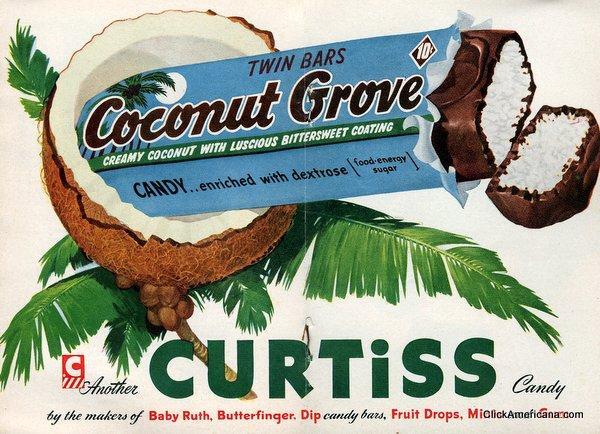
Coconut Grove was a creamy coconut bar that had bittersweet chocolate wrapped around the coconut. It was the perfect combination of sweet, creamy, and utterly delicious. They even used dextrose to flavor the bar, rather than pure sugar. They made the statement that dextrose was a food energy sugar, which was why they chose it for this purpose.
This was a 5-cent candy bar when it came out and it was very popular. People loved the sweet flavors paired with rich chocolate. The unfortunate reality is that this candy bar had a very short shelf life. Finding history detail and even the year it was discontinued is impossible to find.
The history of the candy bar seems to have been lost with the closing of Curtiss Candy Company.
Coconut Grove Candy Bar Timeline
- 1916 — Otto Schnering founds Curtiss Candy Company near Chicago, Illinois.
- 1920 — Kandy Kake renamed and reformulated; becomes Baby Ruth candy bar.
- 1931 — Curtiss sponsors air racer John H. Livingston at airshows.
- 1934 — Curtiss sponsors a Monocoupe racer in a competitive air race.
- c. 1940 — Earliest historical references suggest Coconut Grove bar appears.
- c. 1949 — Earliest confirmed dated memory of Coconut Grove candy bar.
- 1964 — Curtiss Candy Company sold to Standard Brands after ~50 years.
- Post-1964 — Standard Brands later merges with Nabisco; Nestle acquires remaining brands.
Coconut Grove Candy Bar vs Mounds Bar
| Feature | Coconut Grove Candy Bar | Mounds Bar |
|---|---|---|
| Candy Type | Coconut bar with bittersweet chocolate | Coconut bar with dark chocolate |
| Texture | Creamy coconut center | Soft coconut center |
| Introduced | c. 1940–1949 | 1920 |
| Manufacturer | Curtiss Candy Company | Peter Paul / Hershey |
| Flavors | Coconut with bittersweet chocolate | Coconut with dark chocolate |
| Availability | Discontinued; no longer available | Widely available today |
| Price Range | Originally 5 cents | Approximately $1.50–$2.00 today |
Curtiss Candy Company
Let’s circle back to the Curtiss Candy Company, which is where the magic really happened. They are known for tons of delicious candies, many of which are still sold today but have transitioned to a different branch. You likely recognize things like Baby Ruth, Butterfingers, Peppermint Patties, and more. They even have bite-sized candies, drop mints, gum, and Miracle Aid drink mixes.
Otto Schnering was the founder of Curtiss Candy Company in 1916. He chose this name based on his mother’s maiden name. At the time of foundation, it was the heart of World War I and he feared using his own given name would be a trigger that would not go over well with his German heritage. He chose something that sounded more American to avoid the backlash at the time.
Quick Quiz
Which Of These Is The Oldest Candy?
Their first candy to bring to market was the Kandy Kake. This is what we now know as Baby Ruth. It started out as Kandy Kake but was changed a little bit around 1920. Then the name changed then as well. Their next candy bar was the Butterfinger. Both of these are still popular today under the Nestle brand.
Curtiss was known for creative ingenuity throughout the years. In 1931, the company sponsored John H Livingston, who was an air racer. The air racer flew in various airshows as part of a team. In 1934, he also sponsored a Monocoupe racer in an air race.
Curtiss Candy Company made a candy that was known as Jolly Jack candy. This was really popular throughout World War II. In fact, when army rations were passed out, this candy was included in them, making a lasting impression for soldiers and people alike.
Curtiss Candy Company is no longer in operation. The company was sold to Standard Brands in 1964, after about 50 years in operation. Standard Brands later merged with Nabisco, and Nabisco created Nestle. Nestle is now the owner of any of the candy bars that are still in production.
Unfortunately, the Coconut Grove Candy Bar is not one of those.
Logo
When Was Coconut Grove Candy Bar Invented?
The Coconut Grove bar was invented sometime around 1949. This is the earliest dated memory of the candy bar. From the history that we can find, the Coconut Grove bar was only on the market for less than 10 years.
This is one of those candies that has very little story to find, and the times and dates of their invention and discontinuation seem to have been lost in history. With so many different candies, it’s impossible to catch every one, leaving us to try to decipher those details on our own.
Who Owns Coconut Grove Candy Bars?
The details of ownership remain unclear for this company as well. We know that Curtiss Candy Company is no longer in business. The company sold to Standard Brands in 1964, and sold most of their candy line to them at the time. However, we do not know if the Coconut Grove bar had already been discontinued at this time, or whether Standard Brands chose not to produce it further.
This is one of those details that leads us to wonder whether the name died with the Curtiss Candy Company. It’s also quite possible that Curtiss Candy Co had already discontinued the candy bar prior to that time. There is simply no documentation of this to be found.
How Did Coconut Grove Candy Bar Get Its Name?
The naming convention of this candy bar doesn’t need a fancy story. We can pretty much gather where the name came from with what little we know of the candy bar. After all, it was a delicious coconut candy bar with decadent chocolate. It practically tasted like an island vacation, right?
While the candy bar is obviously not a coconut grove, it will make you feel like you’re enjoying that island getaway without actually going anywhere. The coconut and chocolate make the perfect tasteful pairing, and the name just fits.
Reminiscing with Alternatives
If you remember those nickel candy bars that were the Coconut Grove candy bar, then you likely already know there is no true replacement. However, take heart that you can find other candy bars that have been made with similar concepts. While they won’t be exactly the same thing, they might just get close to satisfying the craving.
Here are some alternatives that might appeal to you to try and see if you can get close.
- Bounty Bar (most similar)
- Mounds
- Almond Joy (adds an almond)
- Ocho Candy Bars
Of course, you could always look for some homemade alternatives too if you’re craving something just like this. There are a lot of mock recipes for Coconut Grove, as well as the similar Bounty Bar.
Ingredients
- Sugar
- Coconut
- Vegetable Butter
- Corn Syrup
- Dextrose
- Invert Sugar
- Powdered Skim Milk
- Cocoa
- Salt
- Lecithin
- Artificial Flavor
Pictures
Conclusion
It’s always sad to hear of a timeless classic such as the Coconut Grove candy bar, only to find that there is so little history to discover. We know only the bare details for this candy bar and yet so many people speak of their memories and how much they loved or enjoyed it.
While Coconut Grove candy bar may have been lost in time, it was a delightful choice while it was around. For now, you can grab one of the alternative options and reminisce about those good old days.
Frequently Asked Questions about Coconut Grove Candy Bar
What was the Coconut Grove candy bar?
The Coconut Grove candy bar was a creamy coconut bar wrapped in bittersweet chocolate, produced by the Curtiss Candy Company. It was marketed as a 'tasty TV treat' and originally sold for 5 cents. The bar used dextrose rather than pure sugar for flavoring, which the company described as a food energy sugar.
Who made the Coconut Grove candy bar?
The Coconut Grove candy bar was made by the Curtiss Candy Company, founded in 1916 near Chicago, Illinois by Otto Schnering. Curtiss was also responsible for well-known bars like Baby Ruth and Butterfinger. The company operated for approximately 50 years before being sold to Standard Brands in 1964.
When was the Coconut Grove candy bar invented?
The Coconut Grove candy bar is believed to have been invented around 1949, which represents the earliest confirmed dated memory of the product. Some historical references suggest it may have appeared as early as around 1940. Based on available history, the bar was likely on the market for less than 10 years.
Why was the Coconut Grove candy bar discontinued?
The exact reason for the discontinuation of the Coconut Grove candy bar is unknown, as much of its history has been lost over time. The bar had a very short shelf life on the market, lasting less than 10 years. It is unclear whether the bar was discontinued before Curtiss Candy Company was sold in 1964 or whether the new ownership chose not to continue production.
Can you still buy the Coconut Grove candy bar today?
The original Coconut Grove candy bar is no longer available for purchase. The Curtiss Candy Company is no longer in operation, and the Coconut Grove bar did not carry over to subsequent ownership under Standard Brands or Nabisco. However, similar coconut and chocolate reproduction bars can be found on the market today for those seeking a comparable treat.



This was my favorite candy bar my grandfather made. I miss the bar but my grandfather more.
Barbie
I was in grade school in the 1950’s and there was a lady who sold candy in a little area as we were leaving the cafeteria going back to our classroom or outside to recess. On many days I would stop to get a Coconut Grove candy bar! They are my all time favorite. There are other coconut bars but none quite like Coconut Grove….
This was my mother’s favorite candy bar. Her grandfather would give the kids each 5 cents for candy. This is the one she always got. She said they are no longer made but I wanted to know more about this candy. I wasn’t expecting so much information I found here. What a great article. Thank you.
I remember Coconut Grove candy bars from 1953. I loved them. We only got candy bars once in a while. 5 Cents for it at the time. I lived in Missouri at the time.