Robin Egg Candy: History, Origin & Facts
Please leave a review or any memories of this snack in the comments at the end of this post.
Snack History Nostalgia Rating: ⭐⭐⭐⭐☆
There are few candy products with as mysterious a history as Robin Egg Candy. This is a pervasive and very popular Easter candy that seems to have sprung up from nowhere to become one of the most iconic candies around. The foundational treat that gave the Hershey Candy Company the idea for the Robin Egg is likely the Jordan Almond, which has probably been in existence since antiquity. However, the specific origins of the Robin Egg candy are much harder to track down.
Malted snacks are still some of the most popular kinds of candies around despite having been on the market for generations. If you have always loved these crunchy, sweet, colorful little candy eggs, you aren’t alone! This is by far one of the most popular Easter sweets, and even if we aren’t totally clear about where they came from, we all know that we enjoy adding them to easter baskets, baked goods, and more!
| Robin Egg Candy | Facts |
|---|---|
| Introduced | Approximately 1949–1952 |
| Manufacturer | The Hershey Company |
| Candy Type | Malted milk ball with hard speckled candy shell |
| Original Form | Larger, uncoated malted candy egg sold as 'Giants' |
| Still Available | Yes, seasonally for approximately four weeks before Easter |
| Country of Origin | United States |
| Parent Company | The Hershey Company |
| Original Price | Two for a penny; later five for a penny in vending machines |
History
The sweet that likely inspired the Robin Egg is the Jordan Almond. These little sugar-covered almond treats have been served to those with a sweet tooth since antiquity. There is clear evidence that the Jordan Almond could be purchased in Rome and various other areas where Romans relocated following wars and other conflicts as the empire spread. The confections were often served to the nobility at weddings and births and would likely not have been available to anyone who was not of this class.
The original confection that was created by Julius Dragatus was a honey-covered almond that was later covered by a hard candy shell when this candy-making technique came about. Everyone is very familiar with hard candies with this kind of candy shell, and the Jordan Almond made a natural partner with the hard candy shell technique since it sealed up the sweet, syrupy honey ingredients inside the more practical candy casing.
No one is entirely sure when the Hershey Company decided to start making Robin Eggs that used the Jordan Almond candy-making technique for a new and unique purpose. It is likely that the Robin Egg first debuted between 1949 and 1952. The original eggs were not sold with bright sugar coating on the outside, however, and they were bigger than today’s version of the candy.
The original Whopper product was actually called a Giant. These malted candies were the forerunner of the classic malted treat that everyone knows and loves today. The Hershey Company sold Giants for ten years before they changed to the Whopper product model. Whoppers were then used as the base of the Robin Eggs product as well.
By 1952, however, the bright, colorful candy shell had made its appearance, and the smaller version of the candy egg was rolled out to consumers. The original eggs were sold at two for a penny. This was the era of the penny candy, and many kids would run to the local candy stores with a few small coins in their pockets to get sweets on their way home from school each day.
Later, the eggs were wrapped in cellophane and sold as “Fivesomes” out of vending machines. These were also sold for a penny, however, which made them a great deal as compared to buying two for a penny! These eggs were probably more like the regular Whopper candy, which was already making a big name for itself.
Quick Quiz
Which Of These Is The Oldest Candy?
No one really knows when the Robin Egg candy became synonymous with Easter. This likely happened slowly and over time, but by the 60s, the candies were already clearly linked with the Easter holiday and were also clearly sold as festive eggs that were intended to be marketed for this purpose. In the early years, stores sold them year-round, but today, you will find that they begin selling about four weeks before Easter. Once Easter Sunday has arrived, they land in half-price carts and bins, and then they are gone until the next Easter season.
The Hershey Company says that every single Robin Egg is a unique little masterpiece and that no two eggs will be the same. This is because the speckled eggs are technically hand-painted. The company also states that the eggs are shaped through a vacuum process that is top-secret. Most candy companies claim that they have super-secret creative processes, however, so this might just be something that they say to increase the mystery around the product.
The Hershey Company also goes out of its way to make sure that they offer this special candy to consumers who love it. It takes five months to prepare the eggs that are sold each Easter season to those who love them. That is a big investment just for a seasonal snack! However, they say that they sell millions of eggs each Easter season so that probably makes it worth all the effort.
Robin Egg Candy Timeline
- Antiquity — Jordan Almonds sold in Rome at weddings and births
- Antiquity — Julius Dragatus creates original honey-covered almond confection
- 1949 — Hershey likely begins producing original large malted candy Giants
- 1952 — Colorful speckled candy shell introduced; smaller egg size debuted
- 1952 — Original eggs sold at two for a penny in penny-candy era
- Late 1950s — Hershey rebrands Giants product as Whoppers after ten years
- Late 1950s — Cellophane-wrapped Fivesomes sold in vending machines for a penny
- 1960s — Robin Eggs firmly and clearly linked to the Easter holiday
- Present — Hershey spends five months preparing each Easter season's supply
Robin Egg Candy vs Cadbury Mini Eggs
| Feature | Robin Egg Candy | Cadbury Mini Eggs |
|---|---|---|
| Candy Type | Malted milk ball with hard candy shell | Solid milk chocolate with hard candy shell |
| Texture | Crunchy shell with chewy malt center | Crunchy shell with solid chocolate center |
| Manufacturer | The Hershey Company | Cadbury (Mondelez International) |
| Availability | Seasonal, approximately four weeks before Easter | Seasonal, sold before Easter each year |
| Introduced | Approximately 1949–1952 | 1967 |
| Price Range | Varies by bag size, widely available at mass retailers | Varies by bag size, widely available at mass retailers |
| Signature Feature | Hand-painted speckled coating, no two eggs alike | Pastel-colored smooth hard candy shell |
Varieties
Robin Eggs have not changed a lot over the years but there have been a variety of sizes added to the product lineup over time. Originally, the eggs were larger, but when they started being sold in mixed packs, the size was reduced. Today, you can get mini Robin Eggs as well as regular Robin Eggs.
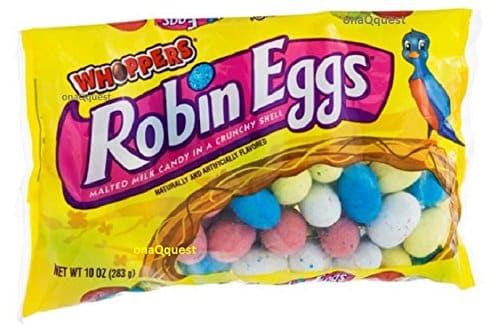
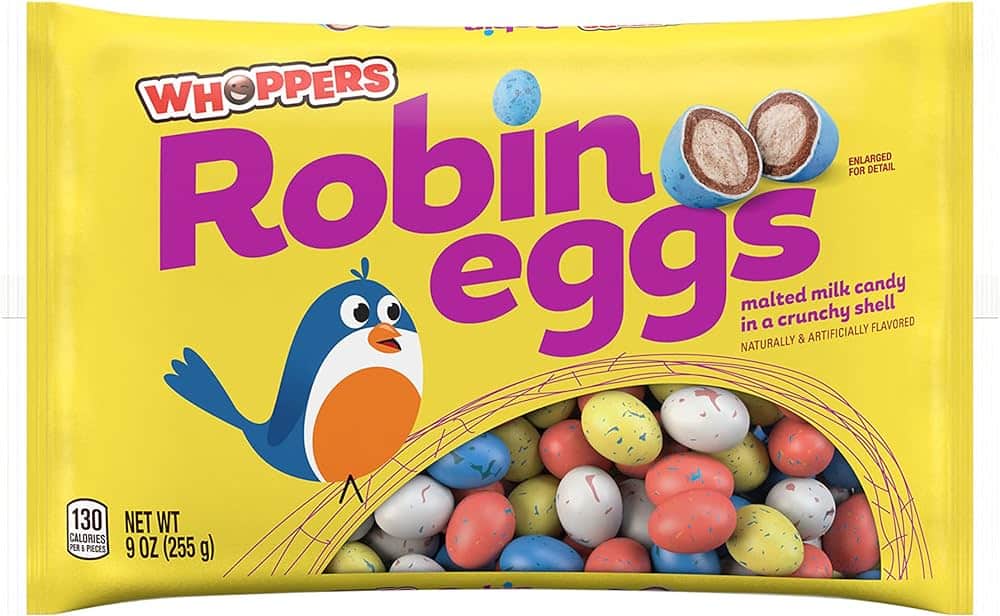
The Robin Eggs product is essentially a Whopper that is coated in a candy shell at this point, and the Whopper product tag is at the top left of every package. No matter whether you choose the mini or the regular eggs, the only real difference besides the colorful candy shell is that the Robin Egg is more oval in shape than a Whopper.
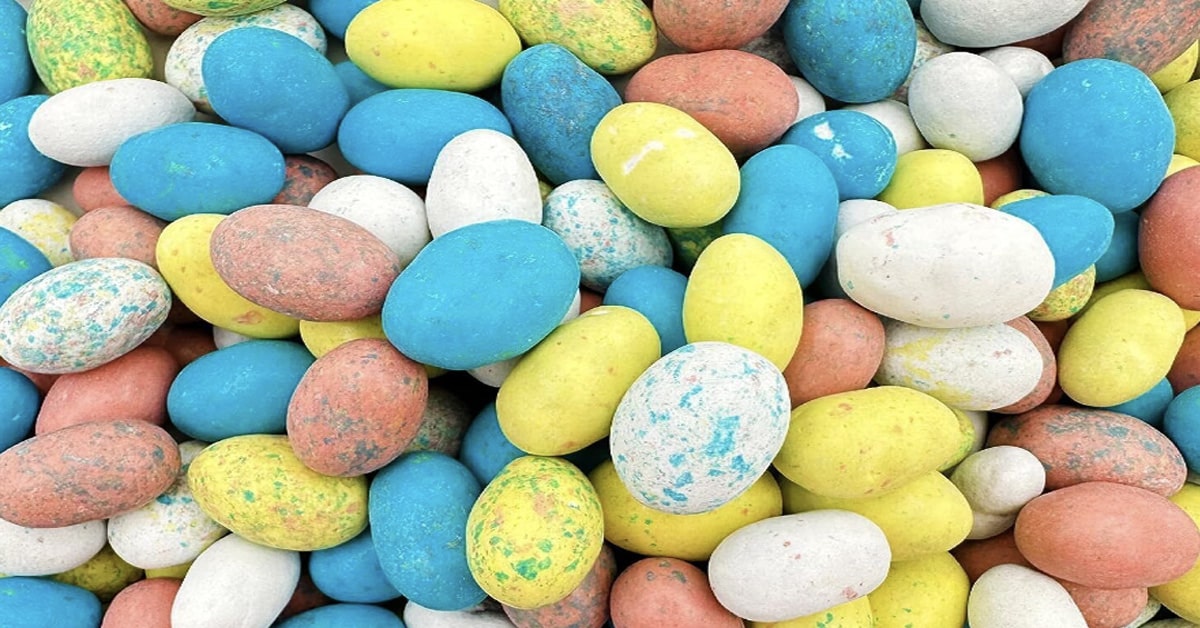
All Robin Eggs come in a mix of colors. There are solid blue, yellow, white, and pink eggs in each bag. The spotted eggs are simply painted versions of the base colors in every bag. The speckled eggs might be more or less spotted since they are not formed with spots included in the candy coating mix they are dipped in.
Some markets also get access to a Robin Eggs kit that allows you to decorate your own eggs. You can do this with the included edible pens that allow you to create any kind of design on the plain, white eggs in the packaging. These Robin Eggs are slightly bigger than the ones that are already prepared to be enjoyed. This gives you more room to create cute and fun designs on the eggs in your egg kit.
Livery and Packaging
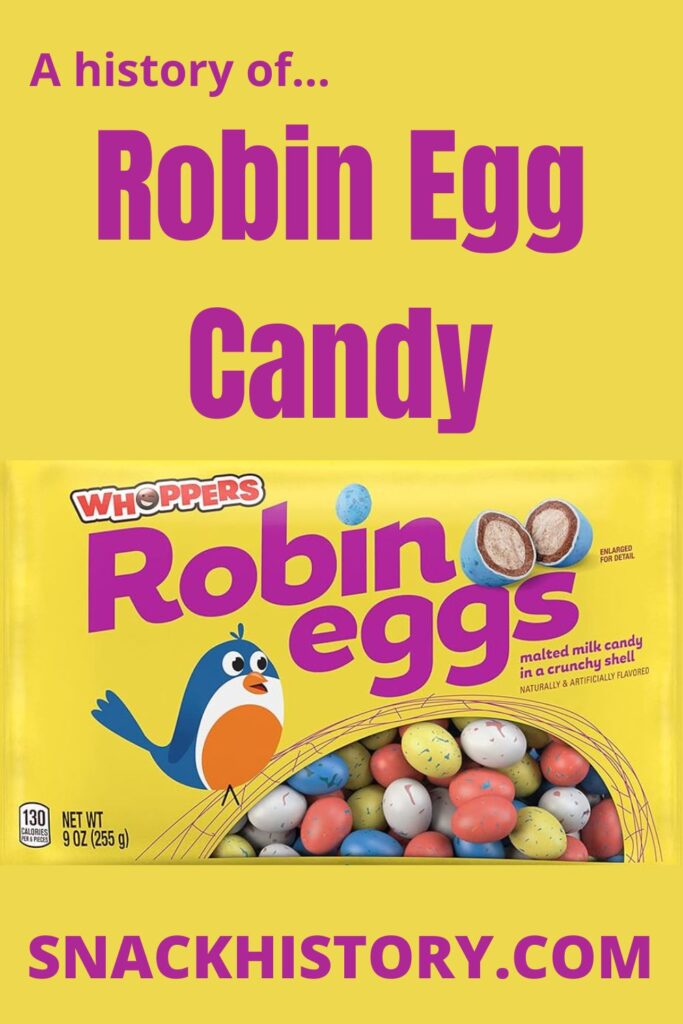
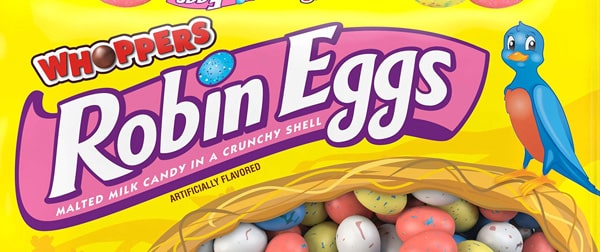
Robin Eggs have been sold in cellophane packaging for years. Each package has a clear window that shows the eggs inside the package. The logo is pink, and the Robin Eggs brand name is indicated in bubbly, white letters. There is also an image of a bluebird to the right of the Robin Eggs logo. The Whoppers brand name is tucked into the lefthand corner of each package.
Mini Robin Eggs come in cartons as well as cellophane packaging. The cellophane packaging is also used to make cute little carrot-shaped wrappers that are sold at some select specialty candy stores. The cartons and the carrots have the same logo as the cellophane packaging, but there are more bluebirds on the cartons. The carrots are topped by wrappers shaped like carrot tops that show the bluebird, or robin, that is present on all the other kinds of packaging types.
Logo
Ingredients
- Sugar
- Dextrose
- Corn Syrup Solids
- Whey (Milk)
- Hydrogenated Palm Kernel Oil
- Palm Kernel Oil
- Corn Syrup
- Cocoa
- Malted Milk [Barley Malt; Wheat Flour; Milk; Salt; Baking Soda]
- Tapioca Dextrin; Artificial Color [Blue 1 Lake; Red 40 Lake; Yellow 5 Lake]; Sorbitan Tristearate; Lecithin (Soy); Salt; Artificial Flavor; Calcium Carbonate; Carnauba Wax
Nutrition
| Serving Size: | 6 pieces (30g) | % Daily Value* |
| Amount Per Serving | ||
| Calories | 140 | |
| Calories from Fat | 50 | |
| Total Fat | 4g | 6% |
| Saturated Fat | 4g | 20% |
| Trans Fat | 0g | |
| Cholesterol | 0mg | 0% |
| Sodium | 50mg | 2% |
| Potassium | 65mg | 2% |
| Total Carbohydrates | 25g | 8% |
| Dietary Fiber | 0g | 0% |
| Sugars | 21g | |
| Protein | 0g | |
| Vitamin A | 0% | |
| Vitamin C | 0% | |
| Calcium | 2.2% | |
| Iron | 0% |
- * Percent Daily Values are based on a 2000-calorie diet.
Pictures
Ads
Robin Eggs haven’t ever been the focus of a large ad campaign. Whoppers were an instant hit, and Robin Eggs didn’t need to be promoted due to their connection with a candy that was already beloved. Seasonal candies tend to sell themselves, which means that candy companies often don’t promote them heavily. While you might not find any ads out there to show you the merits of the Robin Egg, you can certainly find all kinds of ads for Whoppers, which will show you what the center of the Robin Egg product looks like.
This taste test video shows you the appearance of the Robin Egg and also provides some feedback about how they taste:
A video that shows how candy-coated sweets are made:
The Hersheyland website indicates that you can make a wide array of different recipes that include Whoppers as well as Robin Eggs. There are many people who use malted candies to make all kinds of recipes more enjoyable, and the Hershey Company is happy to make sure that you have access to the best of these recipes. Things like Whop-pie and Old-Fashioned Malted Chocolate Cake can be made using the recipes that are on the company website for those who love malted snacks and don’t want to enjoy them out of the bag or the carton.
Frequently Asked Questions about Robin Egg Candy
Who makes Robin Egg candy?
Robin Egg candy is made by the Hershey Company. The candy is essentially a Whopper malted milk ball coated in a speckled hard candy shell. Hershey has been producing the candy since approximately 1949 to 1952.
What inspired the creation of Robin Eggs candy?
The likely inspiration for Robin Eggs was the Jordan Almond, an ancient confection consisting of a nut covered in a hard candy shell. The Hershey Company applied this candy-shell technique to their malted milk ball product to create the Robin Egg. The original Roman confection was itself inspired by a honey-covered almond created by Julius Dragatus, later updated with a hard candy shell.
When did Robin Eggs become an Easter candy?
The exact moment Robin Eggs became associated with Easter is not precisely known, but by the 1960s the candy was clearly and firmly linked to the Easter holiday. This association likely developed slowly and organically over time. Today the candy is sold exclusively for approximately four weeks before Easter and then disappears from shelves until the following year.
How are Robin Eggs made and what makes each one unique?
According to the Hershey Company, every Robin Egg is considered a unique masterpiece because the speckled coating on each egg is technically hand-painted, meaning no two eggs look exactly alike. The eggs are also said to be shaped through a top-secret vacuum process, though the company acknowledges this type of claim is common among candy makers. It takes five months to prepare the eggs sold each Easter season.
What did Robin Eggs originally look like and how much did they cost?
The original Robin Eggs were larger than today's version and did not feature the bright, colorful speckled candy shell that the candy is now known for. They were sold at two for a penny during the classic penny-candy era. By around 1952, the colorful candy shell was introduced and the size was reduced, and later the eggs were sold as cellophane-wrapped 'Fivesomes' in vending machines, also for a penny.



I work at Oaks Candy Corner in Wisconsin. Everyone comes in for the Robins eggs. Two days before Easter they come in and can’t believe we sold out.