

Satellite Wafers: History, Origin & Availability
Please leave a review or any memories of this snack in the comments at the end of this post.
Snack History Nostalgia Rating: ⭐⭐⭐⭐☆
These small and spherical candies known as Satellite Wafers are really unique and not that many people know about them in the US. They are very popular in the UK and in Belgium and they got their start when the space race was first attracting a lot of national attention in many countries. Science Fiction was very popular at this time as well, which helped to promote the candies.
If you love Sherbet ice cream, you will love the flavor of these little treats that are made with sherbet filling inside a rice paper shell. In the US, they are more commonly known as Flying Saucers but in other markets, they are always sold as Satellite Wafers. No matter which market they are sold in, you will be getting the same candy with the same crunchy pearl interior and pastel exterior.
| Satellite Wafers | Facts |
|---|---|
| Introduced | 1950s |
| Manufacturer | Astra Sweets (originally Belgica) |
| Candy Type | Rice paper shell with sugar bead filling |
| Original Flavors | Sherbet / slightly tart and sweet |
| Still Available | Yes, primarily in UK, Ireland, and Belgium; available online in the US |
| Country of Origin | Belgium (Antwerp / Flanders) |
| Parent Company | Astra Sweets |
| Also Known As | Flying Saucers (United States) |
History
The first of these little candies were made in the 1950s. At the time, an Antwerp-based producer was making them as part of their product line which included more practical items. This company also made communion wafers, which is a clear contributor to the Satellite Wafer’s rice shell. This company, Belgica, found that demand for all of their products was falling off and they sold to Astra Sweets.
Astra Sweets bought all of the products that Belgica was selling and they are still the maker of this candy today. The candies are actually an officially registered product of Flanders and they have remained solidly popular in the UK since the 1960s. The wafer market fell off and did not return for the company, but the Satellite Wafer market has been successful for years.
When the Space Race really took off and attention in the UK and the US was fastened specifically on this technology race between the US and Russia, Satellite Wafers got a new boost in sales. Science fiction was also really popular at the time and this helped to promote the candies too. Saucers were included in everything from building design to toys and food items of all kinds. The space craze led to many different products in this category during the 50s and 60s.
These candies are made with a rice paper outer shell that is delicate and a little crispy and that melts in your mouth. The interior is made with sugary beads of powder that have just a little hint of tartness to them. There are not many other candies on the market that are like these little wafers and certainly not many that have a filling like this inside a papery exterior.
The interior candies are colorful and they are like their own unique little treats. You might think that the candy inside the wrapper would be powdery and loose but this special product instead uses these little candy beads to provide the interior flavor of the treat. This is a unique design that makes it possible to enjoy the product in two stages. You can eat the wrapper and the flavor beads as unique items or you can enjoy them as one bite-sized flavor experience.
The original motivation for creating the candies was more about trying to craft a sweet that would be able to handle the heat of summer. Before the days of climate-controlled interiors in homes and businesses and a lack of refrigeration, candies that had chocolate as part of their components would melt in the summer months. Candy companies needed to be able to sell year-round at this point, especially with the increasing popularity of the movie theater.
Summertime movies needed durable snacks that could hold up to the heat of summer and this little candy was perfect for this need. This candy was also affordable to make which was unique at the time. Candy making was costly when working with chocolate and other ingredients in more complex candies.
Quick Quiz
Which Of These Is The Oldest Candy?
The candy was first sold in Belgium and the UK but later made the transition to American markets. They are still sold in the US but they are not as common in places like theaters or mainstream candy stores. These are items that you usually have to order online to be able to try and enjoy them.
Some people report that these candies are surprisingly tangy and sweet at the same time and that the crunchy nature of the interior pearls often surprises people as well. This candy is not like any other candy on the market and it has always been unique enough to speak for itself without much marketing or other support. Despite the fact that the space race has long ago become a thing of memory, there are many people who love these little candies and enjoy them whenever they can buy some.
These little candies are gluten-free and non-GMO which makes them a great choice for those with food allergies. They are not vegan because they do contain beeswax. Honey bees count as a source of animal protein to most vegans and that makes this candy, not an acceptable food source.
This candy is the most popular in the UK and Ireland and they are still sold in Belgium with great success. Britain consistently ranks them in their top sweet lists as well. In 2014, BBC did an article about the lasting popularity of this little candy and covered the influence that the little saucer-shaped candies have had in the UK over the years.
Satellite Wafers Timeline
- 1950s — Belgica of Antwerp first creates Satellite Wafers in Belgium.
- 1950s — Candy designed to withstand summer heat without melting.
- 1960s — Satellite Wafers become solidly popular in the United Kingdom.
- 1960s — Space Race boosts sales; flying saucer imagery dominates culture.
- 1960s — Candy expands from Belgium and UK into American markets.
- Post-1960s —
- 2014 — BBC publishes article on Satellite Wafers' lasting popularity.
Satellite Wafers vs Refreshers (Swizzels)
| Feature | Satellite Wafers | Refreshers (Swizzels) |
|---|---|---|
| Texture | Crispy rice paper shell with crunchy sugar bead interior | Chewy, fizzy pressed sugar tablet |
| Introduced | 1950s | 1975 |
| Manufacturer | Astra Sweets | Swizzels Matlow |
| Flavors | Sherbet / slightly tart and sweet | Lemon, strawberry, blackcurrant, and others |
| Price Range | Budget-friendly penny candy tier | Budget-friendly penny candy tier |
| Availability | Widely available in UK and Belgium; online in US | Widely available in UK; limited in US |
| Dietary Notes | Gluten-free, non-GMO, not vegan (contains beeswax) | Vegetarian-friendly, no beeswax |
Eating Satellite Wafers
This candy can be enjoyed in various ways. You can simply pop them into your mouth and enjoy them as a single bite, or you can suck on them and let them dissolve slowly. Some people like to bite the side of the candies and pour the filling into their mouths. There are people who liken the inside of the candies to a combination of Pop Rocks and Fun Dip which can make eating them in this way very fun.
The candies are usually sold in a bag so you will have plenty of sweets to enjoy when you order them. There are many candies like this that are sold in smaller bags or batches which is not as much fun. Satellite Wafers are definitely popular in part because they are sold in such large bags.
What do Satellite Wafers Look Like?
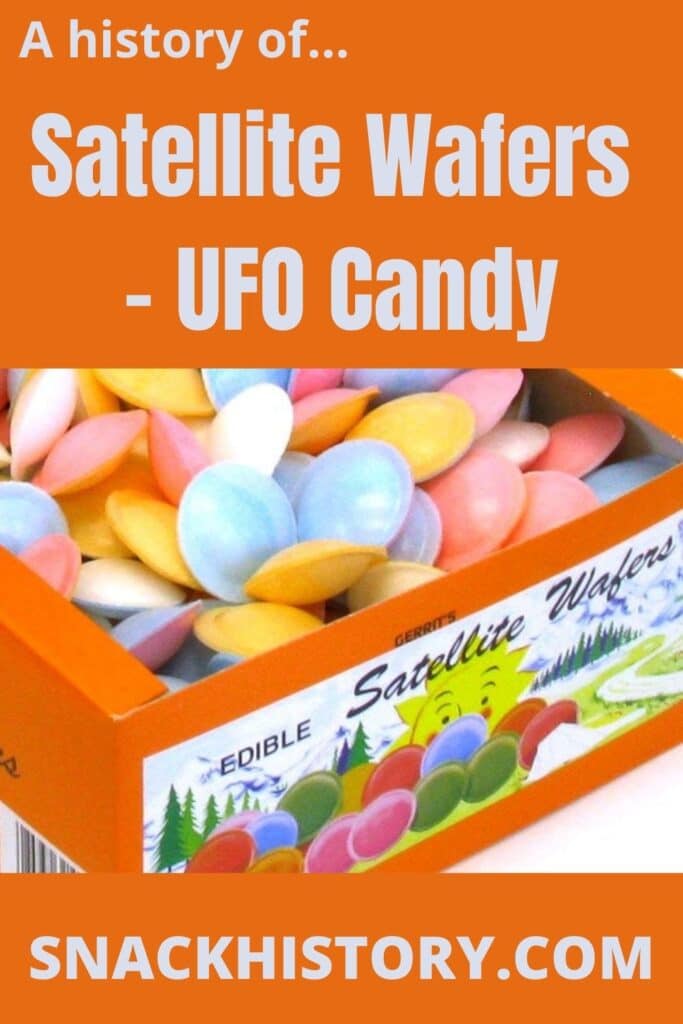
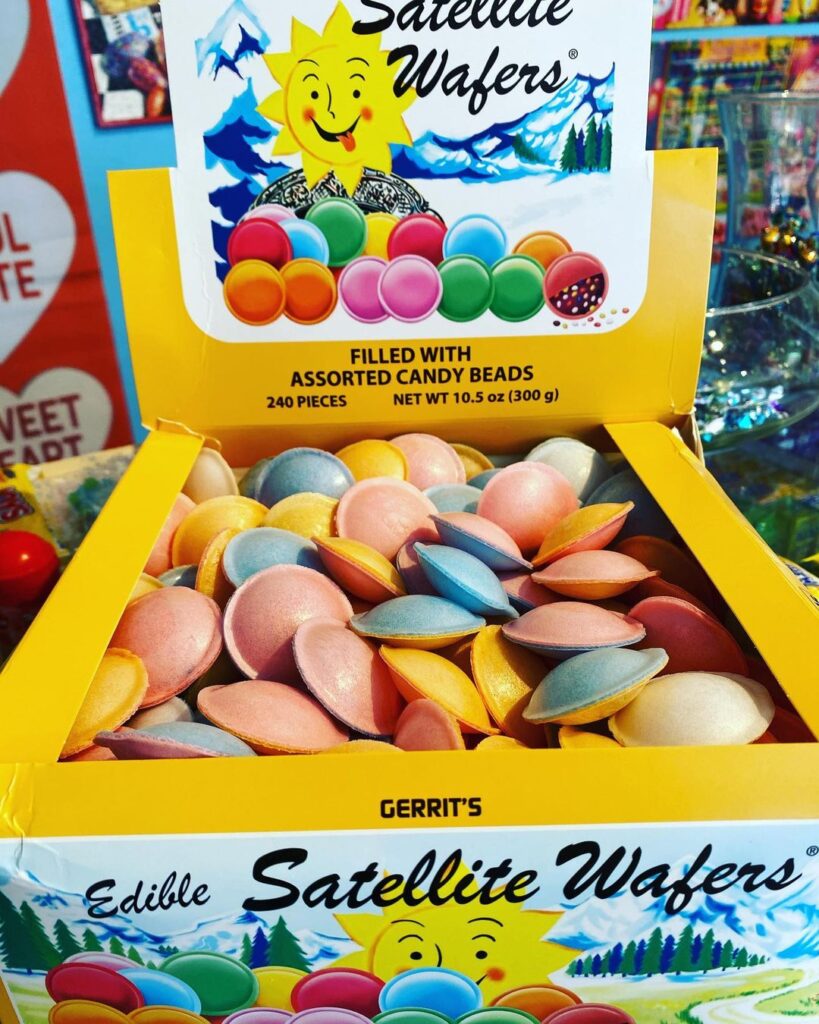
These candies are pastel in color and they are like small pressed discs that have a spherical shape to them. There is a rim around the puffy center of the wafers that are made when the candies are pressed to be sealed shut during manufacturing. They have always been made in these colors and the shape and the manufacturing process have not changed much in the years since they were first made.
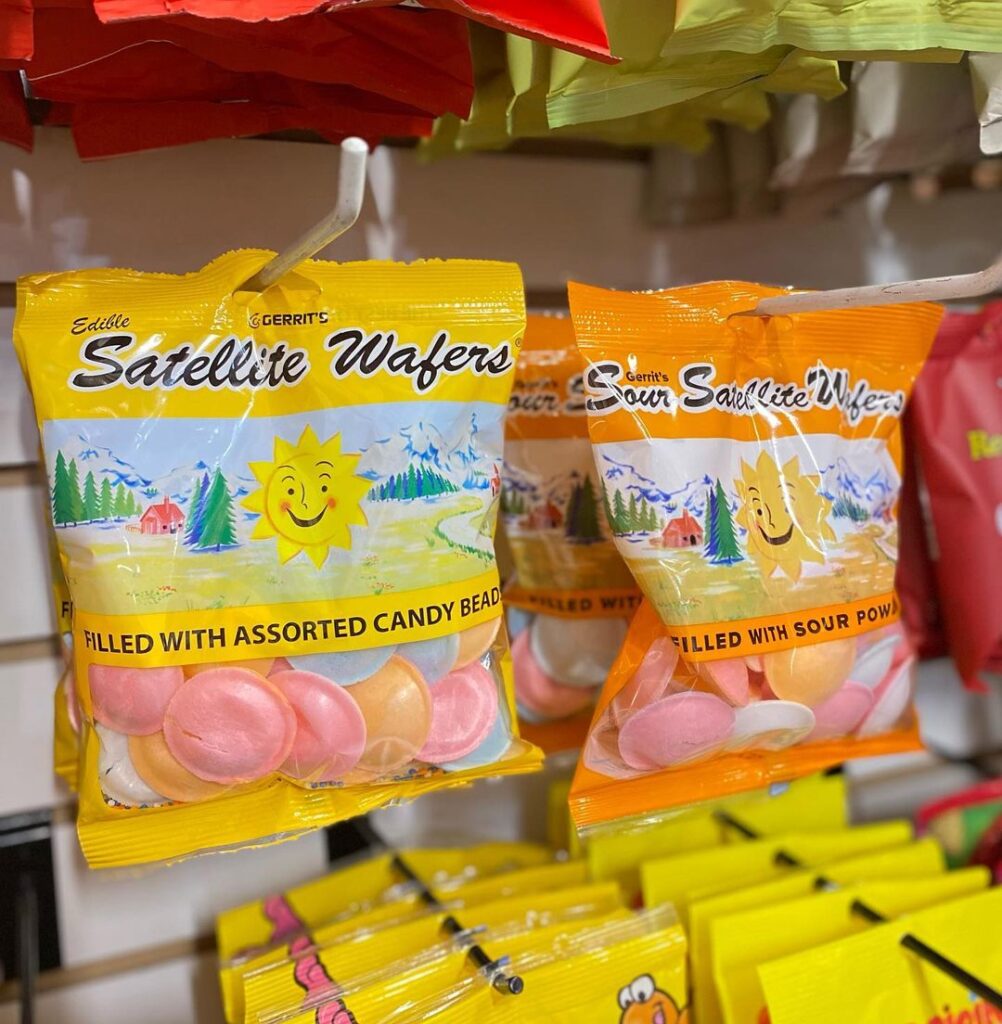
The bags are usually yellow and have a picture of the sun on them. The bottom of the bag is made with clear cellophane that shows the discs inside. The old-fashioned lettering on the bags is reminiscent of candy treats from the 50s as well. You will not have to guess that this candy has been around for a long time and the simple design and presentation are as charming as the candies themselves.
Logo

Buy Online
You can also buy Satellite Wafers at Old Time Candy by clicking the image below.

Ingredients
From the Amazon entry:
- Sugar Pearls (Sugar, water, beeswax, vegetable oil)
- FD & C
- Blue No 2
- Corn starch
- FD & C yellow No 6
- FD & C Red No 4
- FD & C Blue No 2
The packaging proudly states that these candies have been sold in American markets for more than 40 years and that they are really popular even today. This is an accurate claim and you will find that this candy is well worth ordering if you have never enjoyed it before.
Nutrition
| Serving Size: | 30 pieces (40g) | % Daily Value* |
| Amount Per Serving | ||
| Calories from Fat | 4.5 | |
| Calories | 150 | |
| Total Fat | 0.5g | 1% |
| Sodium | 4mg | 0% |
| Total Carbohydrates | 37g | 12% |
| Sugars | 22g | |
| Protein | 0g |
- * Percent Daily Values are based on a 2000 calorie diet.
Pictures
Ads:
Taste tests are the most common way that people find out about these candies these days and these kinds of videos are everywhere online. You can find taste tests for these candies that have been made in many different countries now. If you want to know how popular these candies are, you just need to look at how many different YouTubers in different countries have reviewed them on their site. Not every candy has made the jump to so many countries with such ease.
Most of these videos are ASMR to be prepared for up close and personal eating of the candy in these videos. This is not a video style that is for everyone, but Satellite Wafers lend themselves to this trend because they are both crunchy and soft. You will find that you can see the colors, style, and interior of the Satellite Wafer quite clearly in these videos in case you were wondering what they looked like.
Taste test review:
Frequently Asked Questions about Satellite Wafers
What are Satellite Wafers made of?
Satellite Wafers consist of a delicate rice paper outer shell that is crispy and melts in your mouth, filled with small sugary candy beads that have a slightly tart flavor. The rice paper shell traces its origins to the communion wafers also produced by the original Belgian manufacturer. The interior beads are colorful and provide a crunchy texture that surprises many first-time eaters.
Where did Satellite Wafers originate?
Satellite Wafers originated in Antwerp, Belgium, where a company called Belgica first produced them in the 1950s as part of a product line that also included communion wafers. When demand for Belgica's products declined, the company sold its entire product line to Astra Sweets, which continues to manufacture Satellite Wafers to this day. The candy is an officially registered product of Flanders.
Are Satellite Wafers the same as Flying Saucers?
Yes, Satellite Wafers and Flying Saucers are the exact same candy sold under different names in different markets. In the United States they are more commonly referred to as Flying Saucers, while in the UK, Belgium, and other markets they are sold as Satellite Wafers. No matter which name is used, the candy contains the same rice paper shell and sugar bead interior.
Are Satellite Wafers vegan or gluten-free?
Satellite Wafers are gluten-free and non-GMO, making them a suitable option for those with certain food allergies or dietary preferences. However, they are not considered vegan because they contain beeswax, and most vegans consider honey bees to be a source of animal protein. Those following a strict vegan diet should avoid this candy for that reason.
Why were Satellite Wafers originally created?
Satellite Wafers were originally created to solve the problem of candy melting during hot summer months, particularly before the widespread availability of air conditioning and refrigeration. Candy companies needed products that could hold up to summer heat, especially as movie theaters grew in popularity and required durable snacks. The rice paper and sugar bead composition of Satellite Wafers made them both heat-resistant and affordable to manufacture compared to chocolate-based candies.



Love them as a kid and now as a retired baby boomer.
How do you make them soft and not crunchy …they taste good but I’m not used to them being this fragile
Loved them as a kid in the 70’s. I don’t really see them around much now. If I did I’d grab some.
I’m not sure where you’re located, however in the United States i found them at 5 and below!!