

Lollipops: History, Brands & Facts
Please leave a review or any memories of this snack in the comments at the end of this post.
Snack History Nostalgia Rating: ⭐⭐⭐⭐☆
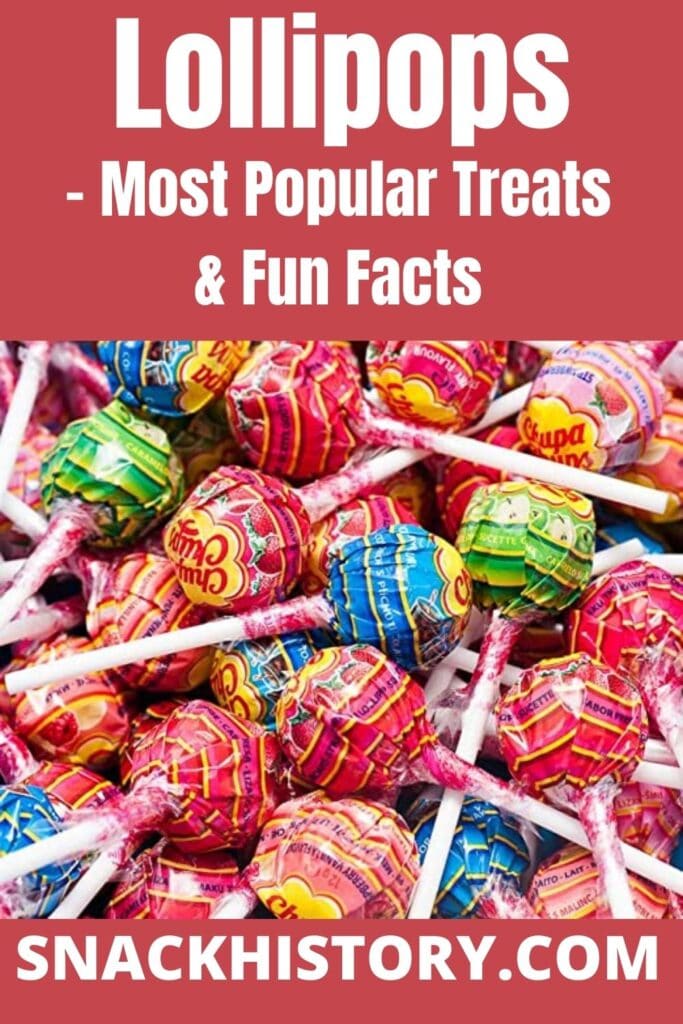
There is probably not a single person who has not tried a lollipop in their lifetime, and surely everyone knows what it is, but still, to explain in a few words, a lollipop is a type of candy with the main ingredients of sugar and water. It is mounted on a stick that is eaten by sucking or licking. It usually has fruit flavors, but you can also find some very unusual ones sometimes, like Sriracha. There are dozens of very popular lollipop brands known around the world, and each of them is created to give people pleasure, especially children.
It’s hard to find a person who does not enjoy sucking on a hard, fruit-flavored candy stick. But have you ever wondered how the first-ever lollipop was created? The history of eating hard candy from a stick dates way further than you can imagine. Next time you are licking your favorite lollipop and thinking how amazingly simple this candy is, think twice. You’ll be surprised to hear how long people have been enjoying these fun treats.
| Lollipops | Facts |
|---|---|
| Introduced | Ancient times (modern commercial form: 17th century) |
| Manufacturer | Various; notable brands include Chupa Chups, Yumearth, and Ring Pops |
| Candy Type | Hard candy on a stick |
| Original Flavors | Honey; later fruit flavors |
| Still Available | Yes, widely available worldwide |
| Country of Origin | Multiple origins; English manufacturers first commercialized hard candy on a stick |
| Parent Company | Varies by brand; Chupa Chups sold in 150 countries globally |
Brief History of Lollipops
You’ll be impressed to hear that the history of lollipops started with the cavemen, who used to collect honey from the beehives on a stick. That is the first record in history about something that very much resembles a modern lollipop. Following that, there are many historical findings and evidence from different eras that prove lollipops have been around for longer than you can imagine.
More advanced development in this practice is believed to have been known since the ancient ages. Archeological findings prove that, in ancient times, the Chinese, Arabs, and Egyptians used honey to preserve some other foods that were easily spoiled. They stuck a piece of wood or something similar in honey to make food easily accessible and consumed it by licking or biting, much like modern lollipops.
In the middle ages, nobles enjoyed something very much like lollipops. They used to eat boiled sugar with a stick. By that time, sugar was not easily accessible and it was considered a luxurious treat that was only affordable for the wealthy.
Lollipop-type snacks disappeared as the years went by because of the lack of honey and sugar, which were the main ingredients. Later in the 17th century, they appeared again, when sugar was more common and was not considered a luxury anymore. English manufacturers were the first ones to try and make hard candy on a stick, and they managed to quickly spread this much-discussed candy around the country.
We can consider it the first step towards making one of the most popular types of candy of all time. In the following years, lollipops continued to be popular treats, and there are various mentions of their production up to the 20th century.
Lollipops Timeline
- Prehistoric — Cavemen collected honey from beehives on sticks.
- Ancient Times — Chinese, Arabs, and Egyptians used honey-covered sticks for food.
- Middle Ages — European nobles enjoyed boiled sugar on sticks as luxury treats.
- 1600s — English manufacturers began producing hard candy on sticks commercially.
- 1958 — Enric Bernat created Chupa Chups in Spain.
- Late 1970s — Frank Richard invented Ring Pops, associated with jewels and pacifiers.
- 2007 — Two families founded Yumearth, creating organic allergy-free lollipops.
Lollipops vs Jolly Rancher Hard Candy
| Feature | Lollipops | Jolly Rancher Hard Candy |
|---|---|---|
| Texture | Hard candy on a stick | Hard candy without a stick |
| Introduced | 17th century commercially | 1949 |
| Manufacturer | Various brands worldwide | The Hershey Company |
| Flavors | Fruit, novelty (e.g., Sriracha) | Primarily fruit flavors |
| Price Range | Budget to premium depending on brand | Budget-friendly |
| Availability | Worldwide, 150+ countries for top brands | Widely available in North America |
| Eating Method | Sucking or licking on a stick | Sucking or chewing |
The Most Popular Lollipops of All Time
There are so many types of lollipops in the world that it’s almost unimaginable to try and taste all of them. Lollipops have become a signature part of some countries’ candy, like Mexican candy. Here is the list of the top 5 most popular lollipops of all time. Is there a favorite on our list?
Yumearth Lollipops
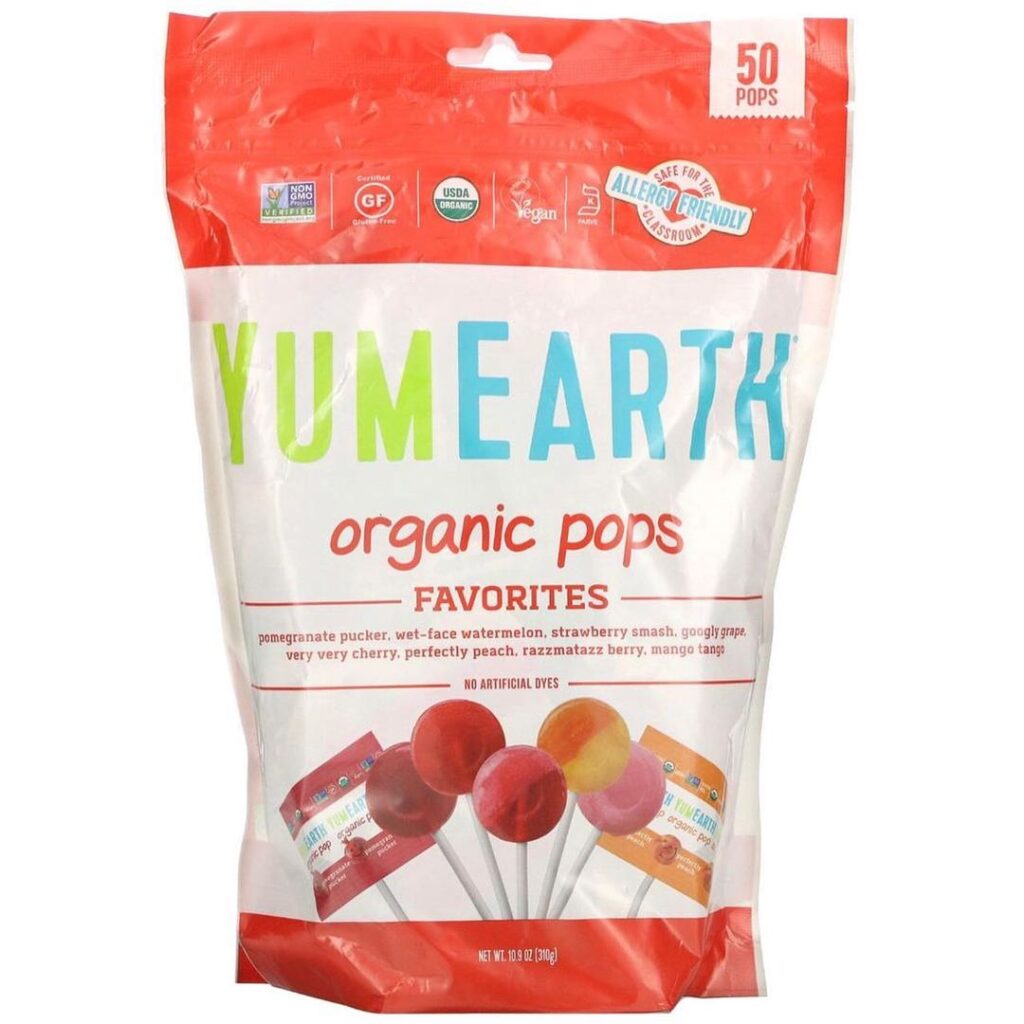
Yumearth lollipops have been around since 2007 when two families decided that they wanted to create a treat that was healthy, organic, and allergy-free. Through some experimenting, tasting, and a lot of hard work, Yumearth lollipops were born. They are all-natural fruit-flavored treats that can be enjoyed without fear of eating unhealthy snacks.
All the ingredients in Yumearth lollipops are natural, without artificial flavors or dyes. They offer a variety of allergy-free candies that are suitable for all kinds of people with allergies. When you have a Yumearth lollipop in your mouth, you don’t have to worry about the ingredients, you can just sit back and enjoy the flavors.
Chupa Chups Lollipops
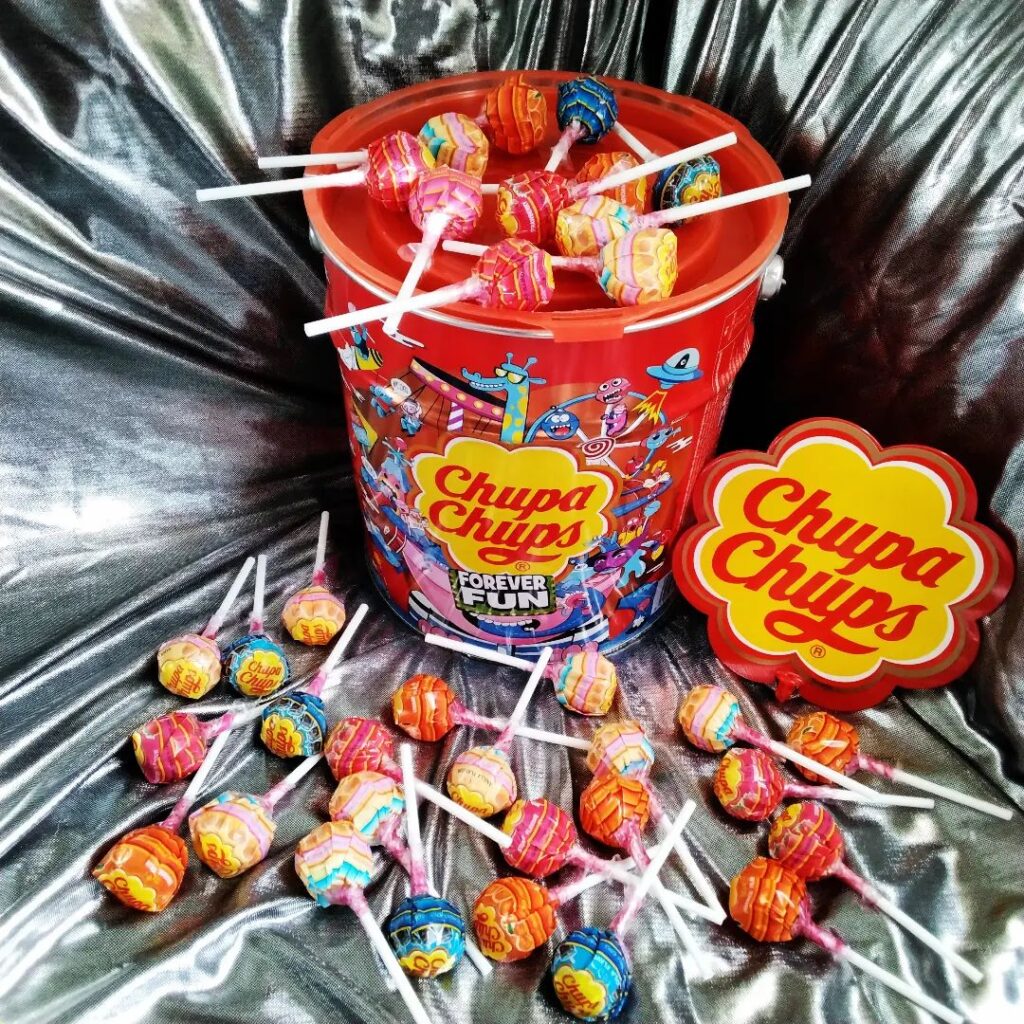
Chupa Chups is a Spanish candy brand, which is one of the most popular lollipops in the world. It was created by Enric Bernat in 1958. It is sold in 150 countries around the world and is the first candy that comes close to being a children’s dream treat. The name Chupa Chups comes from the Spanish verb chupar, which means to suck.
Quick Quiz
Which Of These Is The Oldest Candy?
There’s an interesting fact about the Chupa Chups logo. It was created by the surrealist artist Salvador Dali. Dali is not the only celebrity that has been involved in Chupa Chups marketing. Celebrities like Madonna were hired to advertise the product. The company has a long history of anti-smoking advertising, with the slogan “Stop smoking, start sucking.”
Ring Pops Lollipops
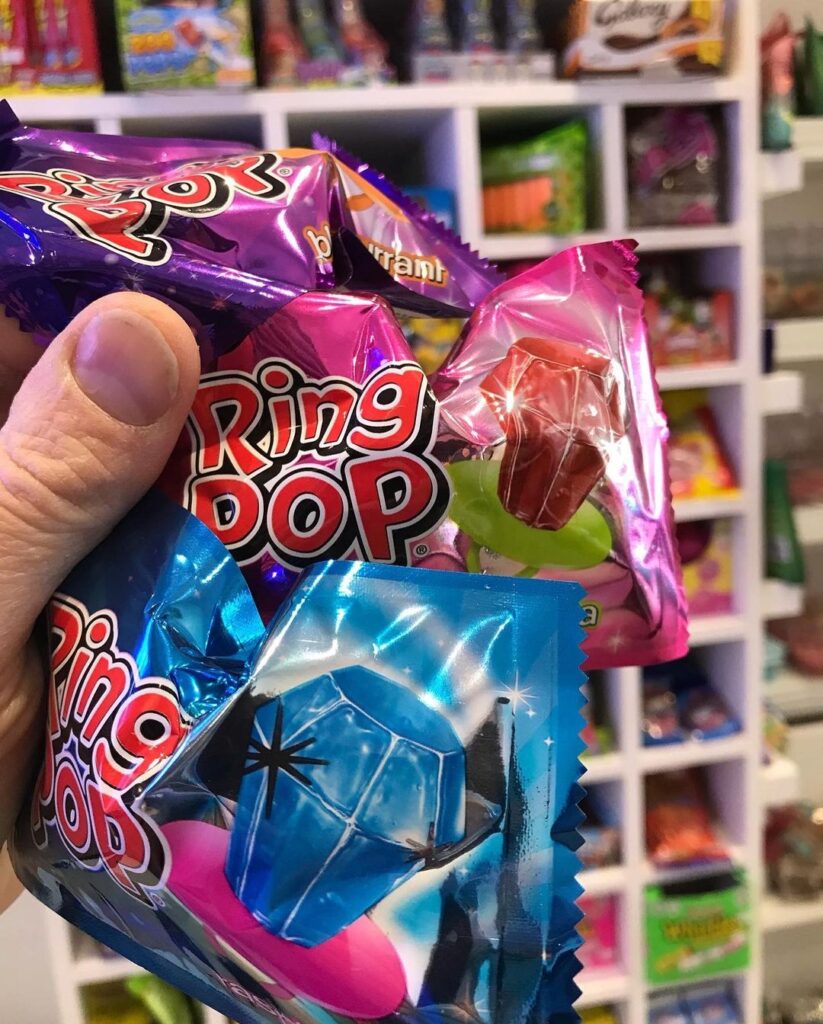
Ring Pops have been around for a long time, and they’ve become one of the most recognizable lollipops of all time. They were first invented in the late 1970s by Frank Richard. Since its invention, Ring Pops have been associated with jewels and even baby pacifiers. They became especially popular among children, who liked to put the ring pops on their fingers and suck them from them.
Ring Pops have had very interesting advertising campaigns. When it first appeared on TV in the 1980s, its theme song and famous slogan caught everyone’s attention. “It’s a lollipop, without a stick! A ring of flavor you can lick!” said the slogan.
Dum Dum Lollipops
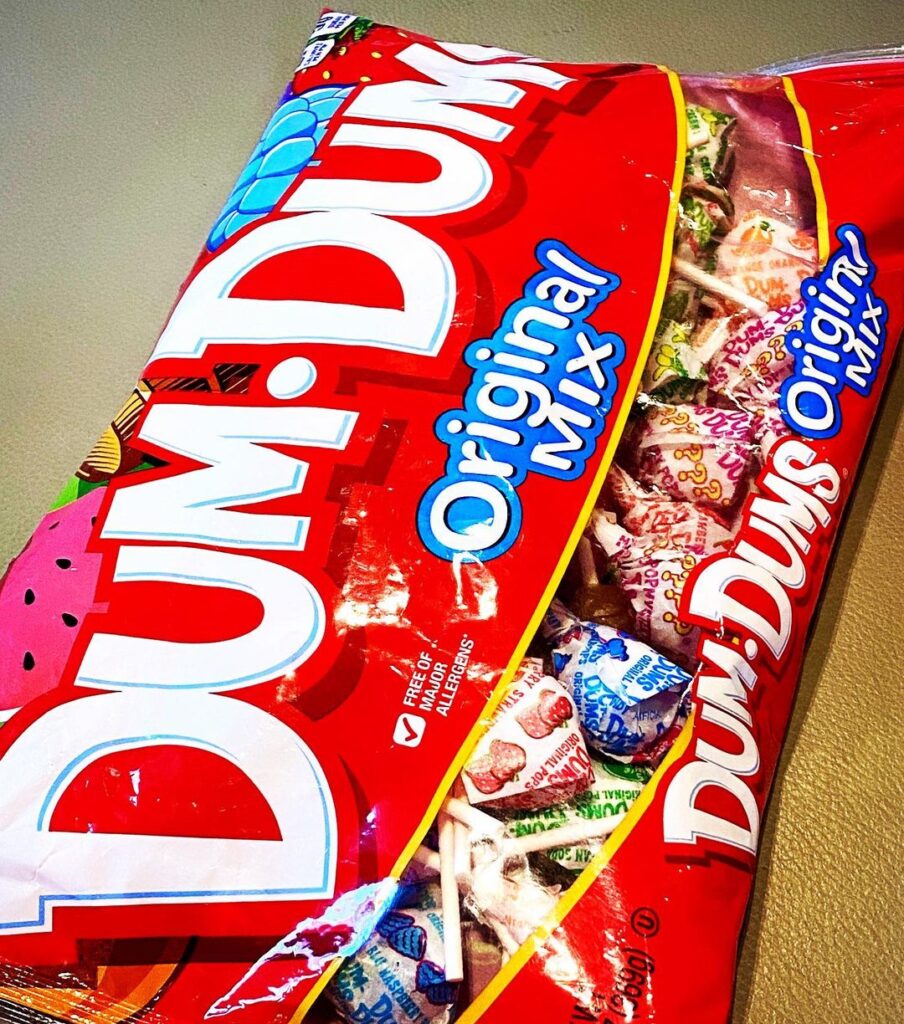
Dum Dums have been around since 1924. They were created in Bellevue, Ohio by the Akron Candy Company. They were named Dum Dums because the company’s sales manager thought it was something that every child could easily say. They became iconic lollipops in the United States and were one of the most popular treats you would find in the pockets of schoolchildren.
Later, Dum Dums were purchased by one of the biggest lollipop manufacturers, Spangler Candy Company. Spangler uses paper sticks instead of the plastic ones in these lollipops, which is rather unusual but safer, especially for young children who enjoy sucking on lollipops the most.
Tootsie Pop Lollipops
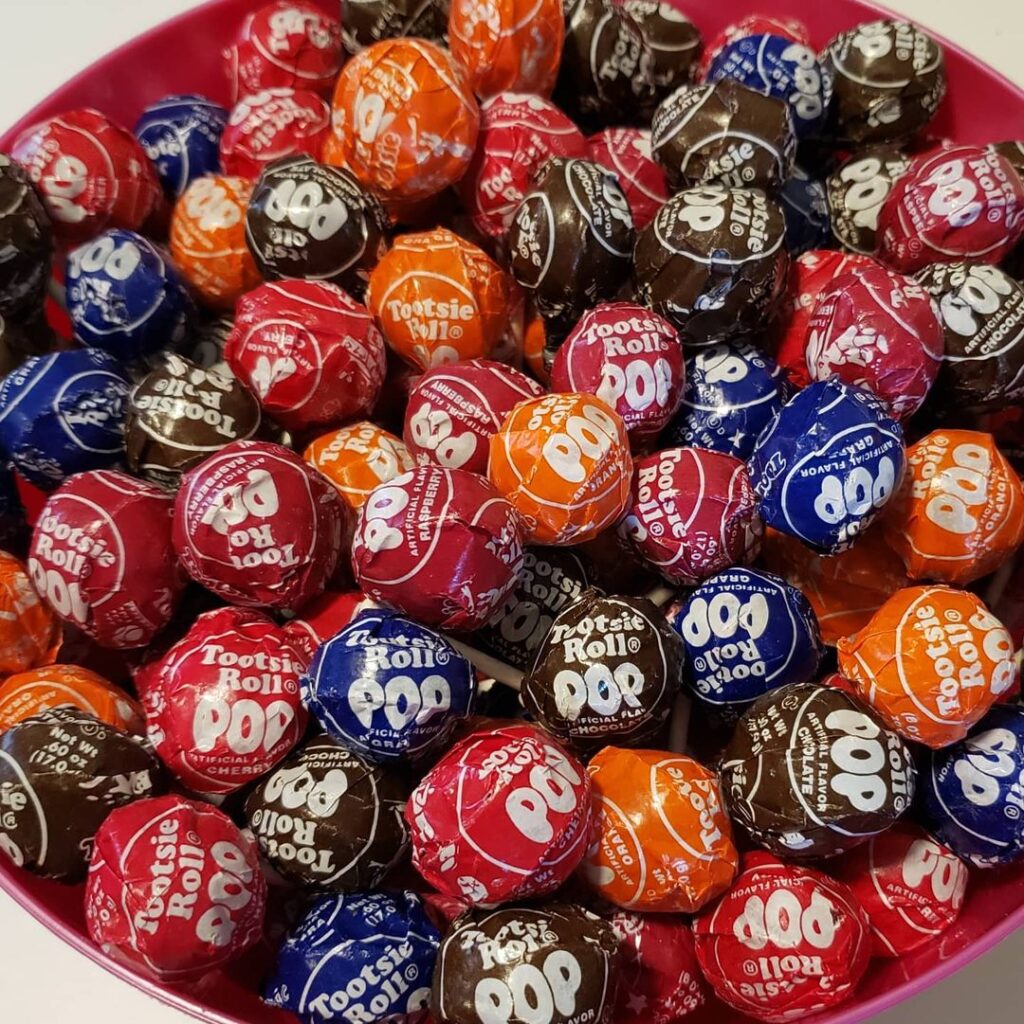
Tootsie Pops were introduced in 1931 by The Sweets Company of America (later known as the Tootsie Roll Company), and have since risen to prominence alongside many other popular lollipops. The idea of creating Tootsie Pops came when the man who worked at the company licked his daughter’s lollipop while chewing a Tootsie Roll.
Tootsie Pops are best known for their catchphrase from the commercials: “How many licks does it take to get to the Tootsie Roll center of a Tootsie Pop?” It became so popular that people even held experiments to answer the question. How many licks does it take for you?
How Were Modern Lollipops Created?
At the beginning of the 20th century, as candy manufacturing was blooming, many saw the potential of commercializing lollipops. It became easier for confectioners to make such simple treats, but the very first one of them was George Smith, who is considered to be the creator of modern lollipops.
George Smith of New Haven, Connecticut, was the first to create a modern type of this hard candy in 1908. The name of it is very interesting. As George Smith himself mentioned later, the name was inspired by his favorite racehorse, which carried the name of Lolly Pop. It took him up to 1930 to manage and patent the name “lollipop.”
There are other theories about what the word “lollipop” stands for. According to one of them, as English lexicologists suggest, it comes from the terms lolly (tongue) and “pop” (slap). There’s another idea that it may be a word of Romany origin, who had the tradition of selling candy apples on a stick, otherwise known as Loli Phaba.
Quickly following George Smith’s invention, candy companies like McAviney Candy Co. and Racine Confectionary Machine Co. started producing varieties of lollipops, which became very popular very quickly. As candy-making machines improved, manufacturers were able to produce large quantities of lollipops in shorter periods of time. Amazingly, they were able to make about 2400 lollipops an hour.
As modern machines came into production, these numbers became the subject of fun, but by that time it was almost impossible to make such a large amount of candy. Today, unimaginable amounts of lollipops are made every day. You can find them in a variety of flavors, colors, and shapes. The most common shapes for lollipops are, of course, spherical ones, but you can find them in swirls, heart shapes, and even rings. Do you have your favorite lollipop? Keep reading and see if it’s on our list below.
Fun Facts About Lollipops
- There are various terms to refer to lollipops, some of which include “lolly,” “sucker,” “sticky-pop,” etc.
- In modern times, companies can make tremendous quantities of lollipops every day. The most notable producer of lollipops today is the Spangler Candy Company, which produces three million units a day, and still, that is not enough to satisfy the demand for lollipops in the United States.
- July 20th is officially National Lollipop Day. It’s a day to celebrate the beloved treat everyone enjoys so much.
- The most people licking lollipops was 12,831, which was an event organized by Coordinadora de Peñas de Valladolid in Valladolid, Spain. The company is also known for holding the records for “largest water pistol fight” and “largest water balloon fight”.
- The largest lollipop ever created was the size of a giraffe, which was 3176,5 kg, and was created by See’s Candies Lollipop Factory in Burlingame, California. The lollipop was chocolate-flavored.
Lollipop Symbolism in Pop Culture
Lollipops have taken on a very symbolic meaning in pop culture. The most popular reference to using lollipops starts with the cover of Vladimir Nabokov’s Lolita, where the girl on the cover of the book, in bright red, heart-shaped sunglasses gazes preciously with a lollipop that rests between her cherry-colored lips. Even though there is no mention of lollipops in the Nabokov novel, advertisers used them to express the characteristics of the main character.
Since then, lollipops have become a symbol of being young, sweet, and sexy. In pop culture, there are various examples of using lollipops as a symbol of charisma and sexuality. In the 90s, teenagers may remember lollipops as being the main prop for the Spice Girls. Lil Wayne’s 2008 song “Lollipop” follows the metaphoric meaning of the symbol, which you can easily identify in the lyrics.
As the years have passed, there has been a significant shift in the way lollipops are brandished. They became more of a double-edged sword. Lollipops are a trademark of DC Comics villain Harley Quinn. It is a symbol of not only sexuality but also power and great intellect. In the series Mr. Robot, an FBI agent has the habit of sucking a lollipop as he chases the bad guys. He always has a lollipop in his mouth when thinking hard about something.
There are various examples of how lollipops are symbolized in popular culture. Starting with being linked with a girly naïveté and feminine sweetness, suckers have altered from being linked to sexy female stereotypes.
Bottom Line
Lollipops have been around for a very long time, starting with cavemen, who were using lollipop-shaped sticks with honey for their survival, and finishing with modern-day lollipops, which you can find almost everywhere. From being a luxurious treat for nobles, they’ve become part of the everyday snacks you keep in your pocket.
This hard candy established a valuable place in popular culture too. Starting out as being associated with women’s sexuality and feminine nature, they’ve altered to become a symbol of intelligence and a highly functioning mind. Lollipops have been symbolized in many popular songs, movies, and TV shows.
Over the years, lollipops broke the candy myths and made people believe that eating candy could be healthy. Now parents can offer kids their favorite lollipop as a snack or include it in their lunchbox without worrying that it might hurt their teeth or increase cholesterol levels.
Despite being very simple, there are more varieties of lollipops than you can imagine. They come to satisfy everyone’s sweet tooth. Do you love sucking lollipops while doing some work or while you are just relaxing? We bet you do.
Frequently Asked Questions about Lollipops
Where did lollipops originally come from?
Lollipops have ancient origins tracing back to prehistoric cavemen who collected honey from beehives on sticks. Ancient civilizations including the Chinese, Arabs, and Egyptians also used honey on sticks to preserve and consume food. In the Middle Ages, European nobles enjoyed boiled sugar on sticks as a luxury treat, and by the 17th century, English manufacturers began producing hard candy on sticks commercially.
Who created Chupa Chups and what makes it unique?
Chupa Chups was created by Enric Bernat in Spain in 1958 and has grown to be sold in 150 countries worldwide. Its name comes from the Spanish verb 'chupar,' meaning to suck. Notably, the iconic Chupa Chups logo was designed by the famous surrealist artist Salvador Dali, and celebrities like Madonna have been hired to advertise the brand.
What are Yumearth lollipops and are they healthy?
Yumearth lollipops were created in 2007 by two families who wanted to make a treat that was healthy, organic, and allergy-free. All ingredients in Yumearth lollipops are natural, with no artificial flavors or dyes. They offer a variety of allergy-free candies suitable for people with different allergies, making them a worry-free option for health-conscious candy lovers.
Who invented Ring Pops and why are they so popular with children?
Ring Pops were invented in the late 1970s by Frank Richard and have since become one of the most recognizable lollipops of all time. They became especially popular among children because they are designed to be worn on the finger like a ring, allowing kids to suck the candy directly from their hand. They have also been associated with jewels and baby pacifiers, adding to their novelty appeal.
What are some unusual lollipop flavors available today?
While lollipops traditionally come in fruit flavors, there are now some very unusual varieties available on the market. One notable example mentioned is Sriracha-flavored lollipops, demonstrating how lollipop makers have pushed beyond conventional sweet flavors. This variety of flavors reflects the creativity and innovation that lollipop brands use to keep the candy exciting and appealing to a broad audience.


Related Posts
Capri Sun: History, Packaging & Availability
Please leave a review or any memories of this snack in the comments at the end of this post. Snack History Nostalgia Rating: ⭐⭐⭐⭐☆…
Read more
Pillsbury: History, Facts & Varieties
Please leave a review or any memories of this snack in the comments at the end of this post. Are you a foodie or…
Read more
Ramune Soda: History, Packaging & Flavors
Please leave a review or any memories of this snack in the comments at the end of this post. Snack History Nostalgia Rating: ⭐⭐⭐⭐☆…
Read more