

Gatorade: History, Origin & Facts
Please leave a review or any memories of this snack in the comments at the end of this post.
Snack History Nostalgia Rating: ⭐⭐⭐⭐☆
Gatorade is not only the first sports drink, but the undisputed king of this category of drink. It has been the official drink of every major sport and sponsored the world’s most famous athletes.
Here is the history of Gatorade and how it became the top sports drink in the world. Going from how scientists at Florida University developed it for the school’s football team to Gatorade’s popularity today.
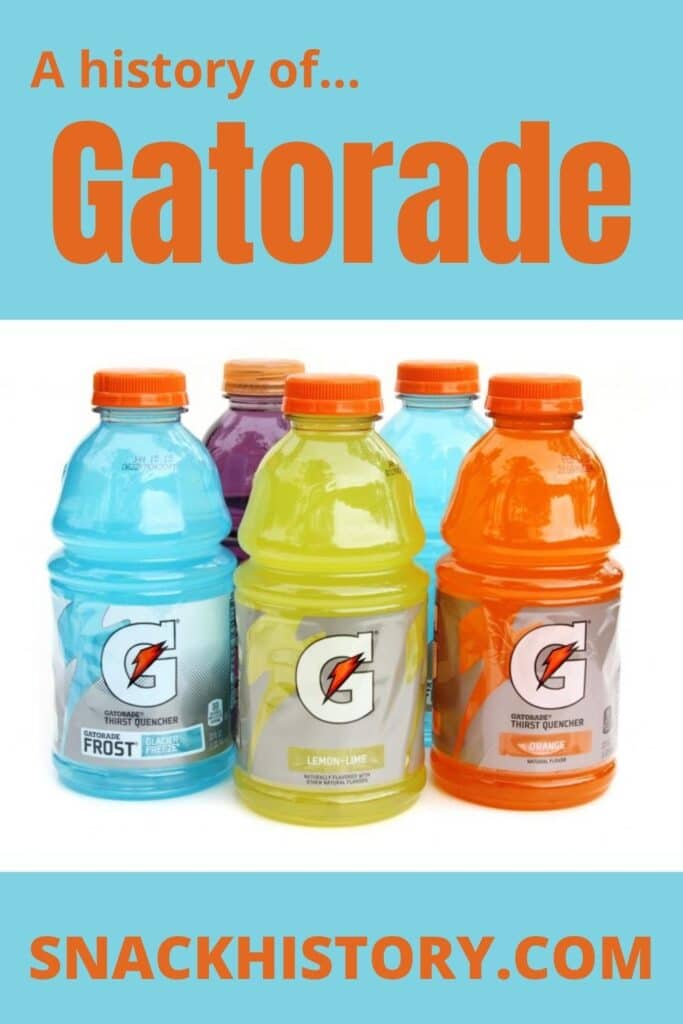
| Gatorade | Facts |
|---|---|
| Introduced | 1965 |
| Country of Origin | United States |
| Original Flavors | Unflavored (original); Orange and Lemon-Lime added later |
| Drink Type | Sports / Electrolyte Drink |
| Still Available | Yes |
| Original Manufacturer | University of Florida Research Team |
| Parent Company | Quaker Oats (acquired 1983) |
| Named After | University of Florida Gators (mascot: Florida Alligator) |
Gatorade Timeline
- 1965 — Dr. Robert Cade begins developing Gatorade at University of Florida.
- 1967 — Florida Gators beat Georgia Tech in the Orange Bowl drinking Gatorade.
- 1969 — Gatorade sold nationally; becomes official NFL drink.
- 1970 — Formula updated; orange and lemon-lime flavors added.
- 1973 — Legal settlement gives University of Florida 20% royalty share.
- 1983 — Quaker Oats purchases Gatorade rights for $220 million.
- 1984 — Gatorade expands internationally, launching first in Canada.
- 1987 — Gatorade arrives in regions of Asia.
- 1988 — Gatorade launches in South American and European markets.
- 1990 — Quaker Oats releases lower-calorie Gatorade Light.
- 1993 — Gatorade reaches Australian market.
Gatorade vs Powerade
| Feature | Gatorade | Powerade |
|---|---|---|
| Introduced | 1965 | 1988 |
| Manufacturer | Quaker Oats / PepsiCo | The Coca-Cola Company |
| Flavors | Wide variety including Lemon-Lime, Orange, Fruit Punch | Wide variety including Mountain Berry Blast, Orange, Grape |
| Electrolytes | Sodium, Potassium | Sodium, Potassium, Calcium, Magnesium |
| Price Range | $1.50 – $2.50 per bottle | $1.00 – $2.00 per bottle |
| Availability | Worldwide | Worldwide |
| Calories (20 oz) | Approximately 140 calories | Approximately 130 calories |
The creation of Gatorade
The story of Gatorade starts at the University of Florida in 1965. A researcher at the school named Dr. Robert Cade was the person who came up with the idea for Gatorade.
His team, who was also credited with creating Gatorade included Dr. H. James Free, Dana Shires, and Alex de Quesada.
They began developing this drink after an assistant coach for the football team named Dwayne Douglas asked Cade a question. Douglas wanted to know how his players could lose so much water weight during a game without peeing the entire time.
Dr. Cade, who was a specialist in kidney disease, knew what the answer was immediately. The players were burning so many carbs and electrolytes that they were sweating all of their body’s water out.
He got together with his colleagues and started talking about Coach Douglas’ question. After going through some different hypotheses, they realized something.
They realized that not only were the players sweating profusely, but they were also losing their ability to perform.
Dr. Cade and his colleagues do a field study
Dr. Cade and his colleagues realized that what they were looking into had never been tested before. The group approached the team’s head coach Ray Graves and asked to perform a study on some of his players.
Coach Graves professed that he didn’t have the ability to understand what they were talking about, but he gave them permission. This is how the drink Gatorade began to be developed.
The development of Gatorade
Cade and his research assistants began to create a drink to help the school’s American football team perform better. A drink that would replenish the player’s carbohydrates and give them energy to keep playing.
A mix of water, electrolytes, sugars, carbs to replenish what the players lost by sweating. They would call the drink Gatorade.
Named after the school’s mascot, which is the Florida alligator. (Gator for short.) The test would last a few years that started with a small number of players and ended with the whole team drinking Gatorade.
The success
In 1967, The Florida Gators beat Georgia Tech in the Orange Bowl. At this time, all of the other teams knew that the Florida football team was drinking Gatorade.
After losing the game, the head coach of Georgia Tech was asked why his team lost and he stated: “We didn’t have Gatorade.”
How did they come up with the name?
Originally, the team of doctors called the drink “Gator-aide,” but realized they couldn’t call it that. By using the suffix “aid” it would mean it would be considered medicine if they ever tried to market the drink.
Since they had done no tests to prove it had medicinal value and to avoid litigation, they changed the name. Instead, they decided to call the drink “Gatorade.”
Gatorade gets sold for distribution
In 1969, a canned food packaging company came to an agreement with Dr Cade and his group. They would buy the distribution rights to sell Gatorade nationally throughout the US.
Immediately following the distribution agreement, a licensing deal was reached with the National Football League. Gatorade would become the official drink of the NFL in 1969.
A year after its debut Gatorade became quite popular, but to make the drink better, the formula was altered. The new formula added the flavors of orange and lemon-lime to make it more palatable and removed the sweetener cyclamate.(It was banned by the US Food & Drug Administration.)
Quick Quiz
Which Of These Is The Oldest Candy?
The 1973 Settlement
In 1973, there were a lot of legal questions around who the real owners of the drink were. The researchers had no legal ownership since they did the testing under a grant awarded by the University of Florida.
The University of Florida would claim ownership and a settlement was reached with the college. They would own a 20% share of Gatorade’s royalties and also gave some royalties to the researchers.
Quaker Oats buys Gatorade
For over a decade, there was a bidding war to buy Gatorade between Quaker Oats and Pillsbury. Quaker Oats would win in 1983 and buy the rights to Gatorade for $220 million dollars.
This purchase would lead to Gatorade expanding to international markets. The drink would first arrive in Canada 1984 and regions of Asia in 1987.
Then in 1988, Gatorade would arrive in South American and European markets and then Australia in 1993.
Along with these expansions into other markets, Quaker Oats would release Gatorade Light in 1990. A lower calorie option Gatorade that was made with a sweetener and not sugar.
All of these expansions and releases into new markets became very lucrative for Quaker Oats. By 1996, the company had grossed an estimated $283 million dollars in sales worldwide.
At the beginning of the new millennium, Quaker Oats had released Gatorade in nearly 60 countries and were making record profits.
PepsiCo buys Gatorade
After almost twenty years of ownership, PepsiCo would merge with QuakerOats and become their parent company. They reached a deal for $13 billion dollars, which gave the rights to Pepsi to sell Gatorade in their line of drinks.
Under PepsiCo, Gatorade continued its expansion into the markets of other countries. Debuting in India in 2004, and the UK and Ireland in 2008.
By 2010, Gatorade was now sold in more than 80 countries and is the top sports drink in many of them.
Marketing
One of the things that made Gatorade catch on so well was the marketing of the drink. When it first debuted in the US market in 1969, it was the only drink that labeled itself a sport drink.
It was originally sold in large glass bottles and a powder to mix with water in a cooler. What caught people’s eyes was the drink’s logo.
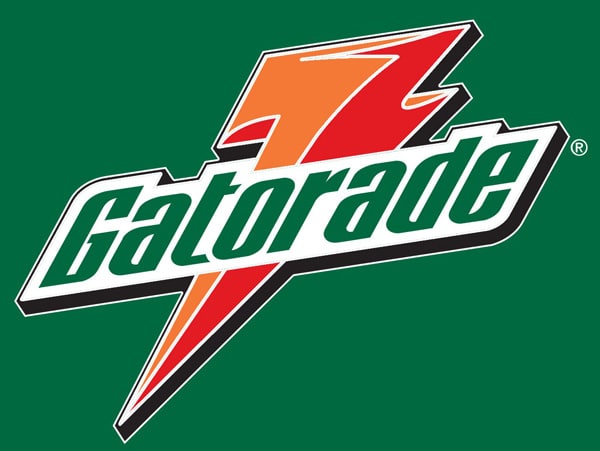
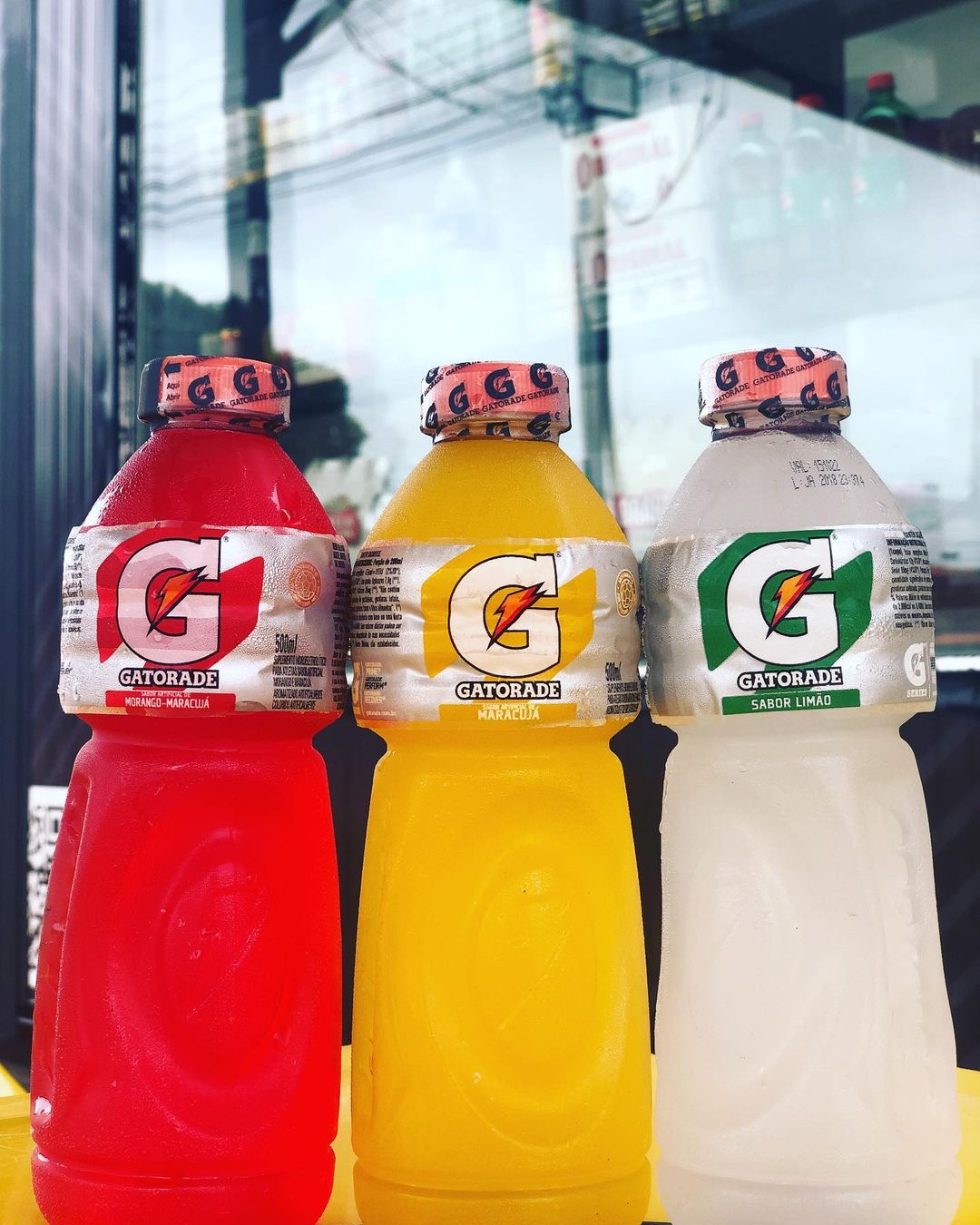
For more than 30 years, Gatorade used variations of green lettering and an orange lightning bolt going through it.
In 2010, the logo was rebranded with just a large G and a lightning bolt next to the letter.
Competition
Five years after the Quaker Oats Company bought the rights to Gatorade, Coca-Cola created their own sports drink. A drink that they would call “Powerade.”
Coca-Cola’s Powerade was a variation of Gatorade that also consists of electrolytes, sodium, salt, sugar, carbs, and a water base. Although Gatorade outsells Powerade in just about every market.
Then when PepsiCo bought the rights in 2001, it became another chapter in the Coke vs Pepsi war. But in this chapter, Pepsi would beat Coke as Gatorade outperforms Powerade in nearly every major market.
Products
For the last 50 years, there have been various different products sold to the public, From different styles of drinks, energy bars, and even gum.
Gatorade Gum
Gatorade Gum was produced in the late 1970s by Stokely Van Camp. This company then tried to reach a deal with the companies Swell and Vicks to market the gum.
Eventually the contract expired and the gum was first discontinued in 1989. It would then be brought back sporadically in the 1990s and early 2000s to different markets.
Gatorade Light
Gatorade Light was the brand’s first attempt at a lighter style of Gatorade with less calories. It was made with a sweetener rather than sugar like in normal Gatorade.
Gatorade Frost
In the late 1990s, Gatorade came out with another lighter version of the drink in different lighter flavors called Gatorade Frost. These were the first Gatorade drinks to divert from the normal fruit flavored drinks and they were very successful.
Gatorade Energy Bar
When PepsiCo bought Gatorade, they would attempt to make an energy bar with the brand name attached to it. This was to compete against other energy bars like the Power Bar and Clif Bar.
Gatorade Performance Series/Prime Series
In the early 2000s, Gatorade released a line of drinks that were designed to be drunk together during a sports game. They called this the Gatorade Performance Series and it consisted of an energy drink, protein drink, and nutrition bar.
Gatorade would attempt this again a decade later with the Prime Series. Prime 1 as a preworkout, G2 traditional lighter calorie Gatorade, and Prime 3 as a post workout protein drink.
Flavors
Here is a list of all of the Gatorade flavors that have ever been released.
- Fruit Punch
- Rain Berry
- Lemonade
- Frost: Cool Blue
- Citrus Cooler
- Tangerine
- Watermelon Citrus
- Lemon-Lime
- Melon
- Frost: Glacier Freeze
- Mango Extremo
- Orange
- Fierce: Green Apple
- Frost: Glacier Cherry
- Fierce: Blue Cherry
- Frost: Arctic Blitz
- Frost: Icy Charge
- Strawberry Watermelon
- Strawberry
- Frost: Tropical Mango
- Berry
- Fierce: Grape
- Lime Cucumber
- Frost: Riptide Rush
- Frost: Cascade Crash
- Strawberry Lemonade
- Low Calorie: Strawberry Lemonade
- Rain Lime
- Rain Strawberry Kiwi
- Lemon Ice
- Frost High Tide
- Low Sugar Grape
- Organic Strawberry
- Organic Mixed Berry
- Organic Passionfruit
- Flow: Blackberry Wave
- Flow:Pineapple Mango
- Fierce: Fruit Punch
- Tropical Cooler
- Citrus Cooler
- Flow Tidal Punch
- Frost Glacier Freeze
Ingredients
- Water
- Sugar
- Maltodextrin
- Acid (Citric Acid)
- Mineral Salts (Sodium Chloride, Sodium Citrate, Monopotassium Phosphate, Magnesium Oxide)
- Emulsifiers (Gum Arabic, Glycerol Esters of Wood Rosins)
- Natural Flavouring
- Sweeteners (Sucralose, Acesulfame K)
- Colour (Brilliant Blue)
Logo
Buy Online
Nutrition
| Serving Size: | 8 fl oz (244g) | % Daily Value* |
| Amount Per Serving | ||
| Calories from Fat | 0 | |
| Calories | 63 | |
| Total Fat | 0g | 0% |
| Saturated Fat | 0g | 0% |
| Trans Fat | 0g | |
| Polyunsaturated Fat | 0g | |
| Monounsaturated Fat | 0g | |
| Cholesterol | 0mg | 0% |
| Sodium | 95mg | 4% |
| Potassium | 37mg | 1% |
| Total Carbohydrates | 16g | 5% |
| Dietary Fiber | 0g | 0% |
| Sugars | 13g | |
| Protein | 0g | |
| Vitamin A | 0% | |
| Vitamin C | 1.6% | |
| Calcium | 0.2% | |
| Iron | 0.7% |
- Percent Daily Values are based on a 2000 calorie diet.
Pictures
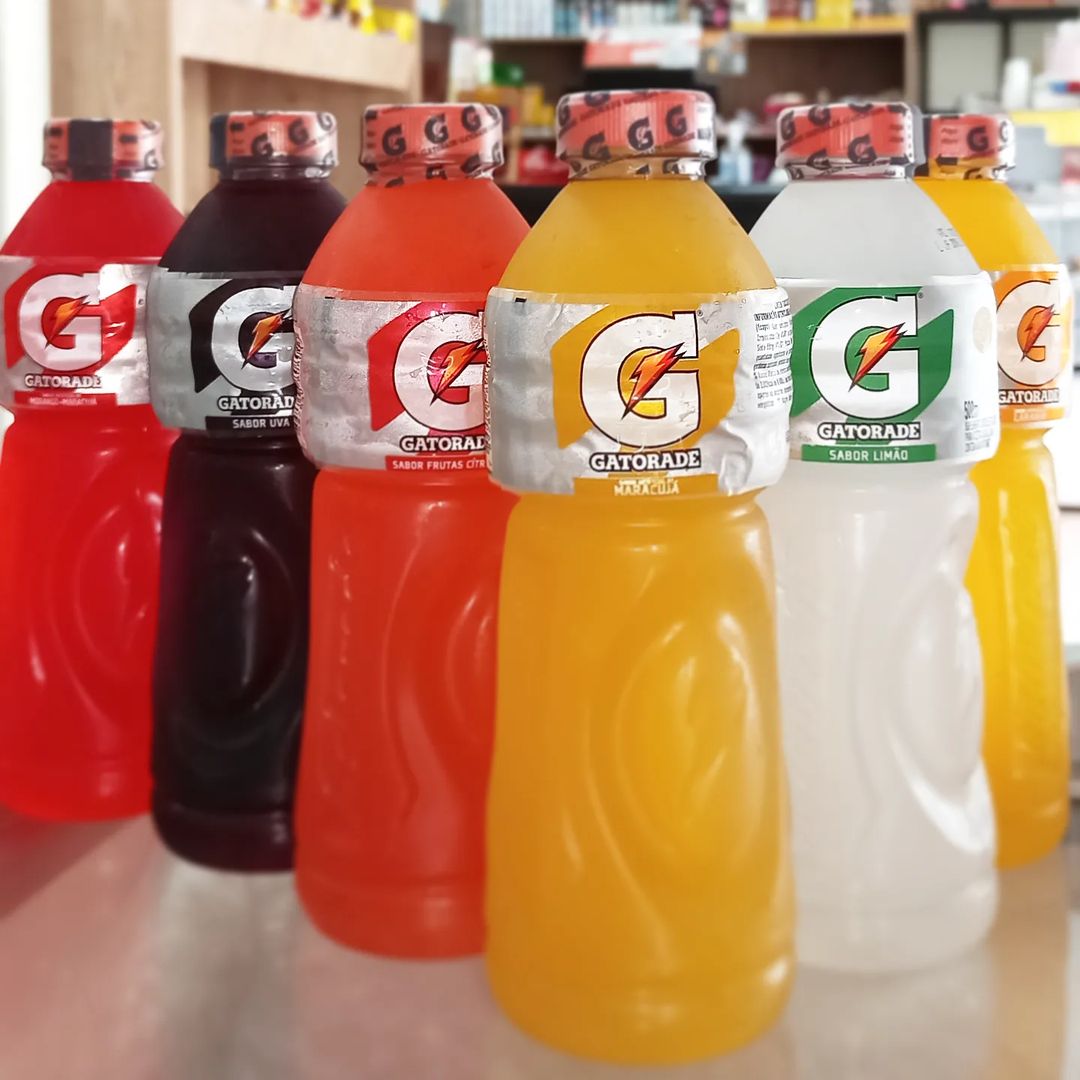
The Gatorade Shower
Gatorade has cemented itself in pop culture with something we know as the Gatorade shower. After a sporting event, the winning team will routinely dump a cooler of Gatorade on a coach or player. A tradition that has been carried out for more than 5 decades.
Gatorade today
Gatorade is without question the number one sports drink in the world with no other drink close to them. It is an internationally recognized brand that has been the official drink of just about every major sport.
The drink makes around a billion dollars in sales worldwide and is now available in nearly 100 countries.
Commercials
FAQ
Who owns Gatorade?
The Gatorade Company is a division of u003cstrongu003ePepsiCou003c/strongu003e.
Who invented Gatorade?
u003cstrongu003eJames Free, Dana Shires and Alex de Quesadau003c/strongu003e created the now-ubiquitous sports drink, Gatorade.
What color is lemon lime Gatorade?
Lemon Lime Gatorade is u003cstrongu003eyellowu003c/strongu003e like a lemon with a little hint of lime.
How much sugar is in Gatorade?
There are u003cstrongu003e13 gramsu003c/strongu003e of Sugar in 8 fl oz (244g) of Gatorade.
When was Gatorade invented?
Gatorade was invented in u003cstrongu003e1965u003c/strongu003e.
Where is Gatorade made?
Gatorade is made in u003cstrongu003eOklahomau003c/strongu003e.
How many calories in Gatorade?
There are u003cstrongu003e63 caloriesu003c/strongu003e in a 8 fl oz bottle of Gatorade.
How much sodium is in Gatorade?
There is u003cstrongu003e95mg of sodiumu003c/strongu003e in a 8 fl oz bottle of Gatorade.
What was the first Gatorade flavor?
The first Gatorade flavor was Lemon and lime.
What flavor is cool blue Gatorade?
Gatorade Cool Blue is u003cstrongu003eRaspberry Flavouru003c/strongu003e.
What flavor is the white Gatorade?
The white Gatorade is u003cstrongu003eGatorade Frost Glacier Cherryu003c/strongu003e.
Frequently Asked Questions about Gatorade
Who invented Gatorade?
Gatorade was invented by Dr. Robert Cade, a kidney disease specialist at the University of Florida. His team, which also received credit for the creation, included Dr. H. James Free, Dana Shires, and Alex de Quesada. The project began after assistant football coach Dwayne Douglas asked Dr. Cade why players lost so much water weight during games without urinating.
How did Gatorade get its name?
Gatorade was named after the University of Florida's mascot, the Florida Alligator, commonly shortened to 'Gator.' The research team originally called the drink 'Gator-aide,' but changed the spelling because using the suffix 'aid' would have classified it as medicine, potentially requiring medical testing and creating legal liability if they ever tried to market it commercially.
When did Gatorade become available nationally?
Gatorade became available nationally in the United States in 1969, when a canned food packaging company reached a distribution agreement with Dr. Cade and his group. That same year, a licensing deal was also struck with the National Football League, making Gatorade the official drink of the NFL.
Who owns Gatorade and how did they acquire it?
Quaker Oats acquired Gatorade in 1983 for $220 million after winning a bidding war against Pillsbury that had lasted over a decade. Following the acquisition, Quaker Oats aggressively expanded the brand internationally, bringing Gatorade to Canada in 1984, parts of Asia in 1987, South America and Europe in 1988, and Australia in 1993.
What was the legal dispute over Gatorade's ownership in 1973?
In 1973, questions arose about who truly owned the rights to Gatorade, since the research had been conducted under a grant awarded by the University of Florida. Because the researchers used university resources and funding, the University of Florida claimed ownership of the drink. A settlement was reached giving the university a 20% share of Gatorade's royalties, while some royalties were also distributed to the original researchers.



You forgot a great 90’s OG Lemon Ice; and the BEST of all the flavors – Frost: High Tide… along with a ton of other flavors. Come on, man.
Loved this deep dive into Gatorade’s history! It’s fascinating to see how a drink born out of necessity became a staple for athletes everywhere. The vintage commercials really showcase how far branding has come. Thanks for sharing these insights!