
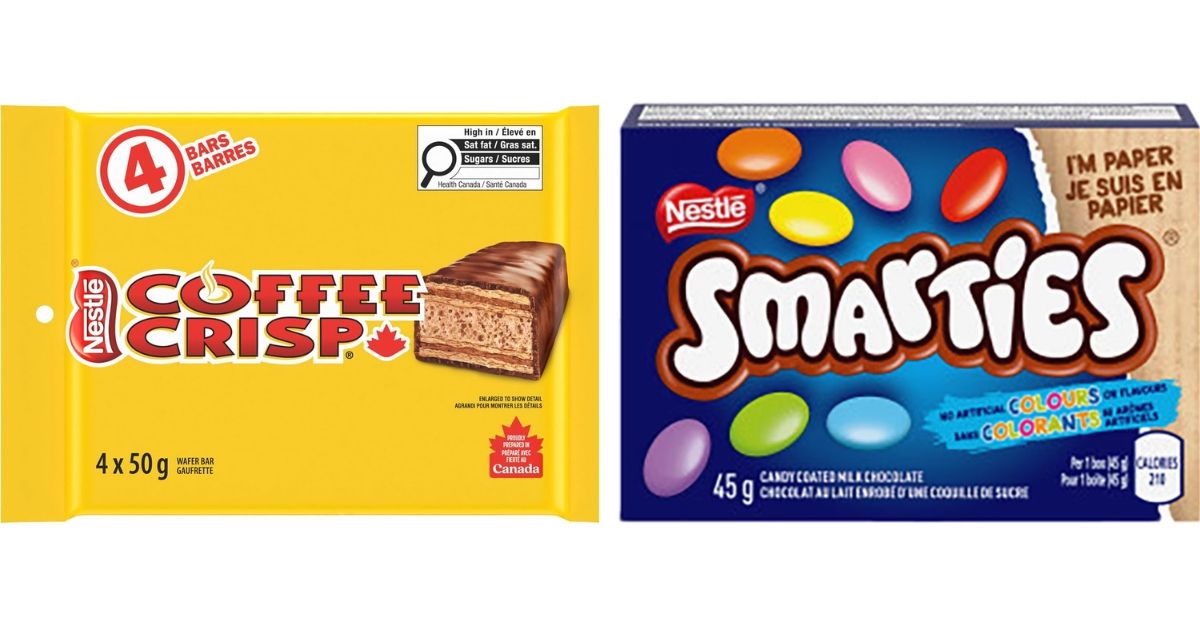
5 Canadian Candies You Can’t Buy in America

It’s easy to assume that the candy that comes from Canada and the United States can be more or less similar. After all, these countries share one of the longest borders in the world, and culturally, they have plenty in common. Still, once you cross a border, you may notice this is not actually the case.
In fact, there are plenty of chocolate bars and candies that are everyday snacks for Canadian people, but Americans have never even seen them before. The same is true vice versa. The reason is that popular candy brands have different products for each country.
Of course, nowadays you can order almost anything online, but if we’re talking about candies that you can easily get from a Canadian store but usually won’t see in regular American stores, these 5 are some of the best examples.
1. Coffee Crisp
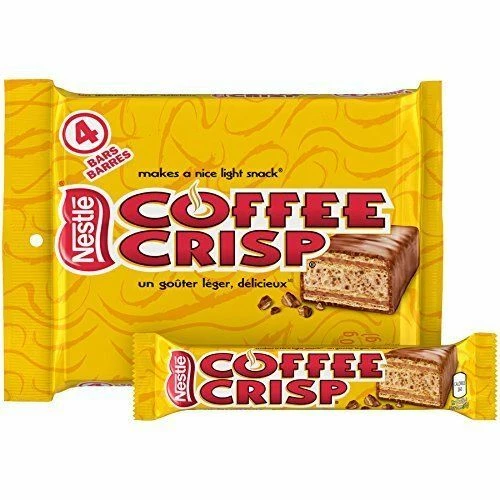
If there is one candy bar that immediately comes to mind when people talk about Canadian chocolate, it’s probably Coffee Crisp. This candy has a reputation of being a Canadian classic, but actually, it comes from Great Britain. In fact, this wafer bar was first created by Rowntree, which is a British candy company that later became part of Nestlé.
Interestingly, this candy wasn’t always called Coffee Crisp. Initially, its name was Rowntree’s Wafer Crisp. The first time its coffee-flavored version was introduced was in Canada in 1938. It became so popular there that the company decided to start producing it in Canada. Soon, it became more strongly associated with Canada than with Britain.
While you can barely find this candy in the US now, it was also sold in the United States for a short time in the 2000s. Today, Americans can still order imported bars online, but you can’t normally find them in an average US store. In that sense, it’s one of those products that feels especially Canadian, similar to certain local services and entertainment options, such as a live casino online Alberta.
2. Smarties
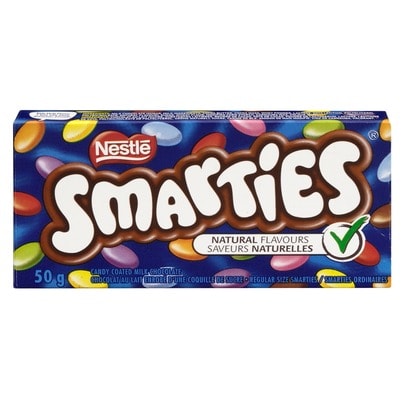
Before you get confused as an American reader, we will say that no, Canadian Smarties aren’t the similar little rolls of sweet and sour candy that are common in the United States. The Canadian version of this candy is much closer to M&M’s, and they represent small pieces of chocolate covered with colorful candy shells. They have been sold under the Smarties name since 1937 and differ significantly from the American version.
Now you may be wondering what exactly makes these two different versions of Smarties share the same name. Well, the answer is explained by the trademarks. In the United States, the Smarties name belongs to the company behind those familiar sugary tablet candies. Meanwhile, Nestlé uses the Smarties name for its chocolate candy in Canada and several other countries.
But here’s one thing that makes things even more confusing: the American-style Smarties are sold in Canada under another name, Rockets. This means that if you ask for Smarties, you’ll get something else, while the Smarties you’re looking for are available in Rockets packaging. As confusing as that.
3. Caramilk
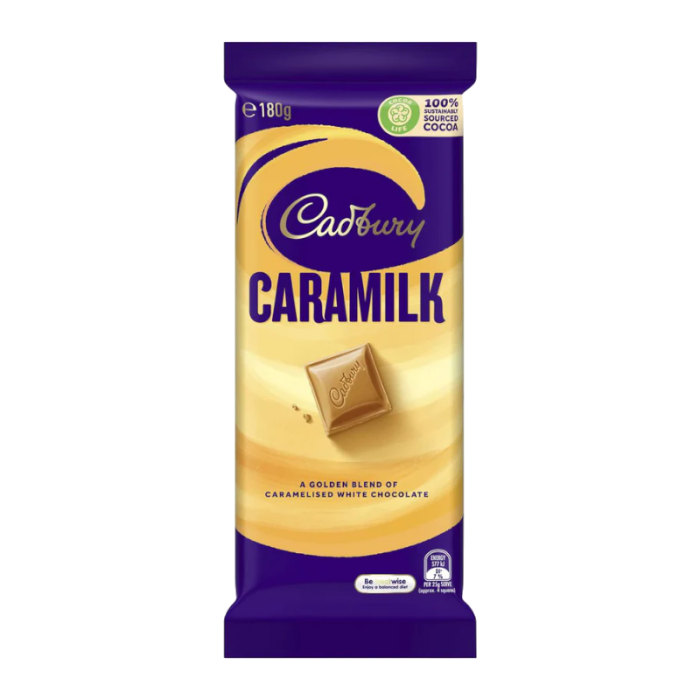
Even if you haven’t tried the Canadian version of this candy, chances are that the name Caramilk sounds familiar. That’s because, for some reason, Cadbury calls Caramilk different chocolate products in different countries.
The Canadian version of Caramilk is a very specific candy bar. It was introduced in 1968 and consists of milk chocolate divided into small squares, with soft caramel hidden inside each one. Even though it sounds simple, this secret is actually the main reason why it became so popular after its famous ad about the so-called Caramilk Secret.
So, if you’re an American and think about ordering a Caramilk online, try to double-check the labels to avoid confusion.
4. Big Turk
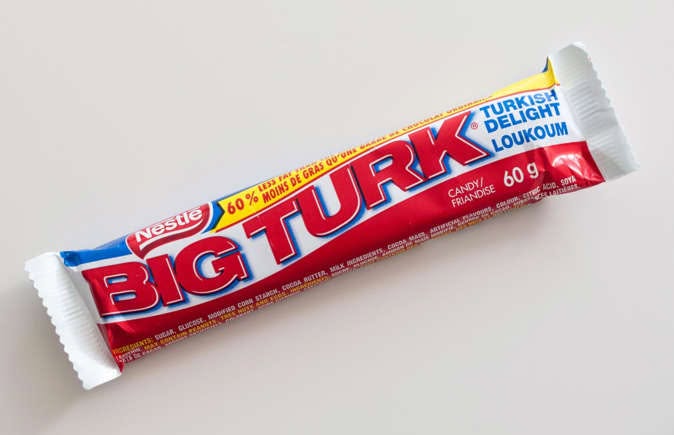
It’s easy to think that these days most chocolate bars are starting to look similar. Luckily, Big Turk is a candy bar that doesn’t easily fall into this category. Big Turk is definitely one of the most unusual Canadian options because instead of caramel, wafers, or peanut butter, it has a soft Turkish delight in the center.
The filling has a chewy texture that feels like jelly and has a sweet berry flavor. That’s what makes Big Turk very different from most chocolate bars out there on the market. That unusual combination is exactly why some people adore it, while others prefer not to even give it a try.
5. Crispy Crunch
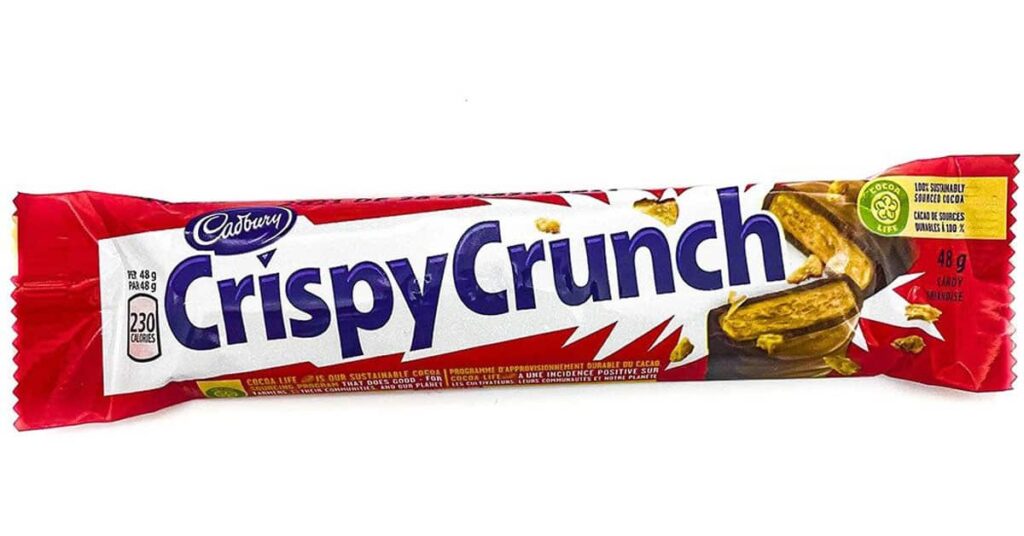
Finally, we have Crispy Crunch, another Canadian chocolate bar that Americans usually won’t find in regular stores. At first glance, it may seem like a little version of Butterfinger, but the filling is different enough, and it definitely deserves its own identity.
Crispy Crunch has a flaky, crunchy peanut center covered in chocolate. It was originally created by Harold Oswin while he was working for the Neilson chocolate company. According to the story, the company invited its employees to come up with new ideas for candy bars, and Oswin won just $5 for his creation. From this perspective, it may sound unbelievable considering how popular Crispy Crunch later became in Canada.
Bottom Line
Considering how close Canada and the United States are located, many people expect that people in these two countries grew up eating the same snacks in the same country. Now you know that it’s far from the truth. At least, these 5 candies prove exactly that.
So, if you ever visit Canada, it’s worth checking out the candy aisles. You might come back with a few snacks that your American friends have never even tried.

Related Posts
Kinder Surprise Egg: History, Facts & Availability
Snack History Nostalgia RatingBig on nostalgia ★★★★★4/5 Quick answer: The Kinder Surprise egg was introduced in Italy in 1974 by Ferrero, inspired by the…
Read more
Milka Chocolate: History, Ingredients & Nutrition
Snack History Nostalgia RatingBig on nostalgia ★★★★★4/5 Quick answer: Milka was first produced in 1901 by the Suchard company in Lörrach, Germany, with its…
Read more
Nik L Nip: History, Facts & Trivia
Snack History Nostalgia RatingPure nostalgia ★★★★★5/5 Quick answer: Nik L Nip wax bottle candies with a liquid fruit filling date to the early 1900s…
Read more